

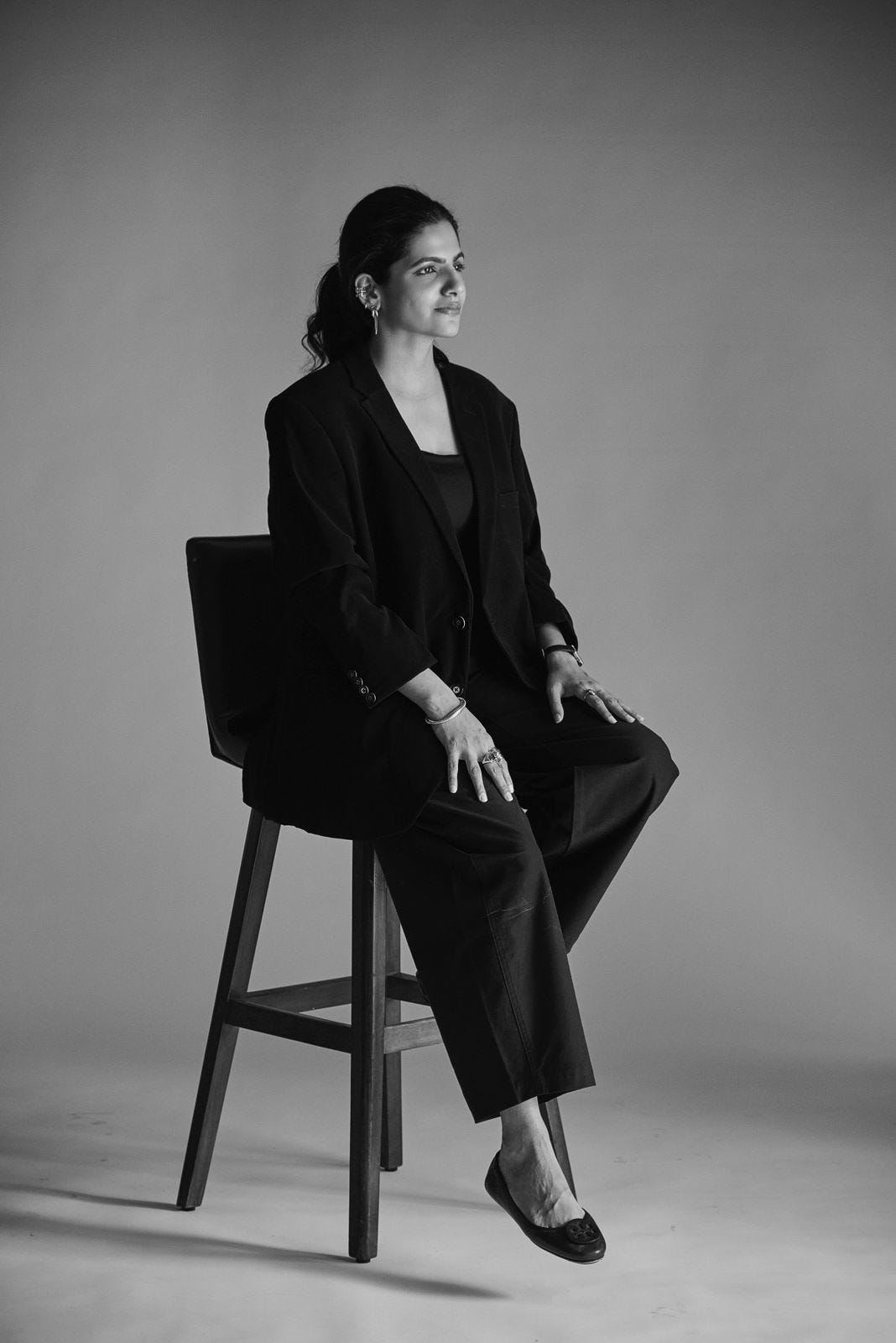
Artist Bio
Born and raised in Agra, the city of the Taj Mahal, Shubhi is the founder and creative director at Object Theory. A deep curiosity, seeded in early childhood, Shubhi has been captivated by stories and how they travel, how they transform, and what they leave behind. This fascination became the foundation of her practice, and a simple realisation its compass: every object has a theory.
The intersection of art expression through paintings, furniture, ornaments, carpets broadly grouped as objects embodying Indian rituals, philosophies and practices in a uniquely Indian design language is the central guiding principle at Object Theory.
Her experiments with creating and curating objects as symbols of art started with a series of sculptures installed in industrial complexes in Agra, made out of scrap from the same industry. These endeavors contributed to the discovery of purpose. To pursue this passion, and get formal education Shubhi went on to study art history, art business, and art marketing at Sotheby’s Institute of Art. To widen her exposure to art at a global level, the past few years have featured intentional visits to world-class museums, galleries, the most insipid backstreets and bylanes, where artisans reside.
Explorations, personal, and professional pursuits across television, print journalism, event design and production, and yoga each discipline has quietly shaped the ethos behind Object Theory.
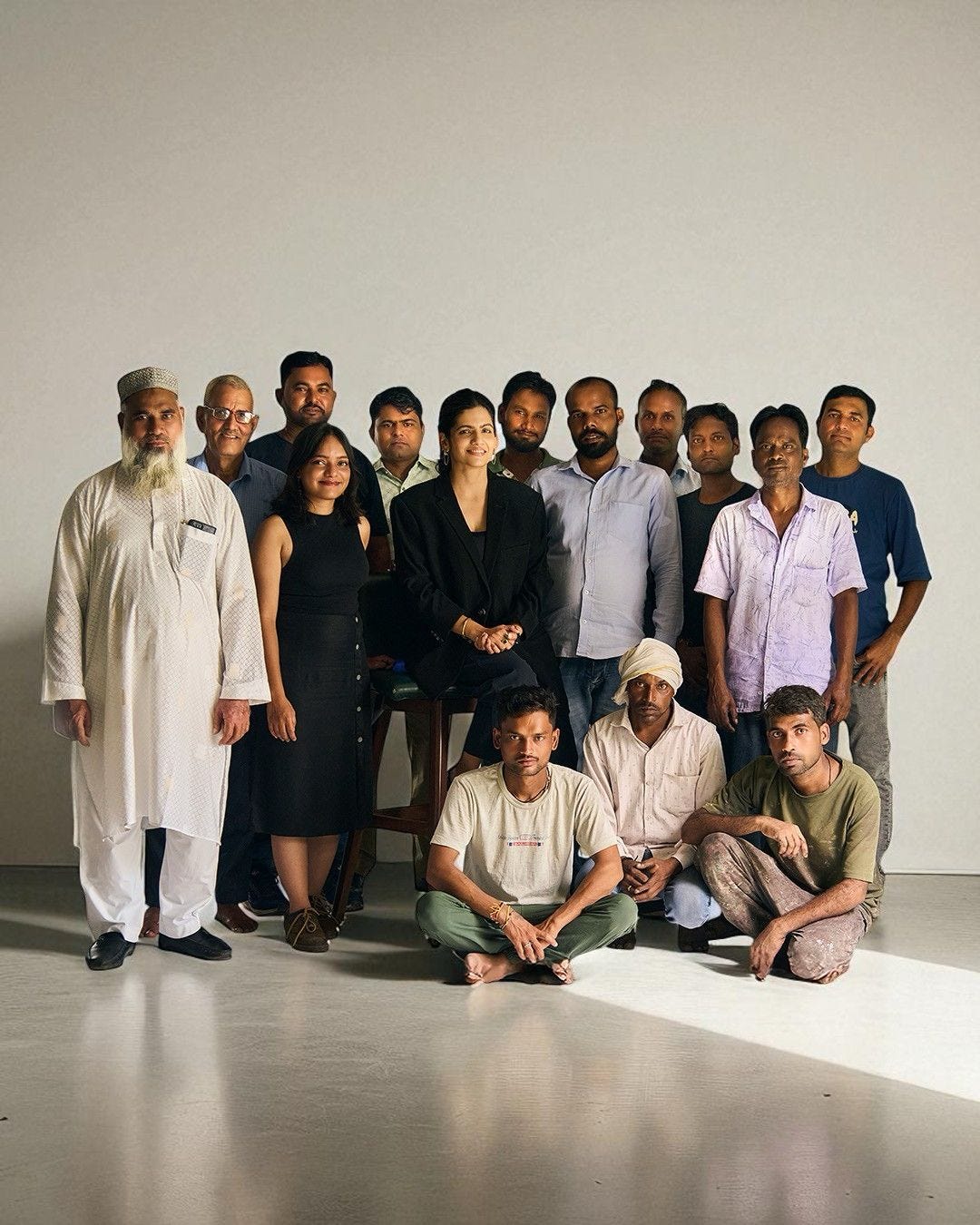
Curated over two years, Object Theory opened its gallery in Agra showcasing a collection of objects made and found in India. The products portfolio comprised, a section inspired from, and depicting Yoga Mudras, to hand-made tribal artworks, lamps, and furniture created depicting Hindu mythology and the lord Shiva, Indian artworks, Mughal carpets and historical objects from all over the country.
The collection was received with unexpected enthusiasm at both the local level in Agra, and across social media, being noticed and mentioned with celebrated names like 1000 Vases in Paris. With over 90% of the first collection sold, Object Theory is now working towards its next product portfolio with a deeper rigour, curatorial eye and a purpose to raise bars for Indian designing.
The Conceptual Framework: Your piece featured in the DUALITIES exhibition navigated complex tensions. Can you dissect the conceptual framework behind this specific work and how it responds to the exhibition’s overarching theme?
At the heart of Yog Chitta Vritti Niroga lies one of the most common tensions in human experience: the duality between a mind in disturbance and a mind in freedom. This cannot be simply defined as modern anxiety. These fluctuations have been the very core nature of the human mind as this became Patanjali’s one of the first chapters written between 200 BCE and 400 CE.
Chitta means the physical body; Vritti the subconscious mind and Niroga means free of diseases. A mind whose activities are free from disturbance. A practising principle only experienced in deep meditation or on the mat.
This is the duality the piece inhabits: the fluctuating mind and the free mind. Not as opposites that must fight each other into submission, but as two states of the same consciousness, one caught in the noise of the material world, its desires, its fears, its endless accumulation of impressions, and the other resting in something quieter, something more essential. One speaks of force; the other speaks of grace. Yoga, in its deepest sense, is the practice of moving between these two states with awareness.
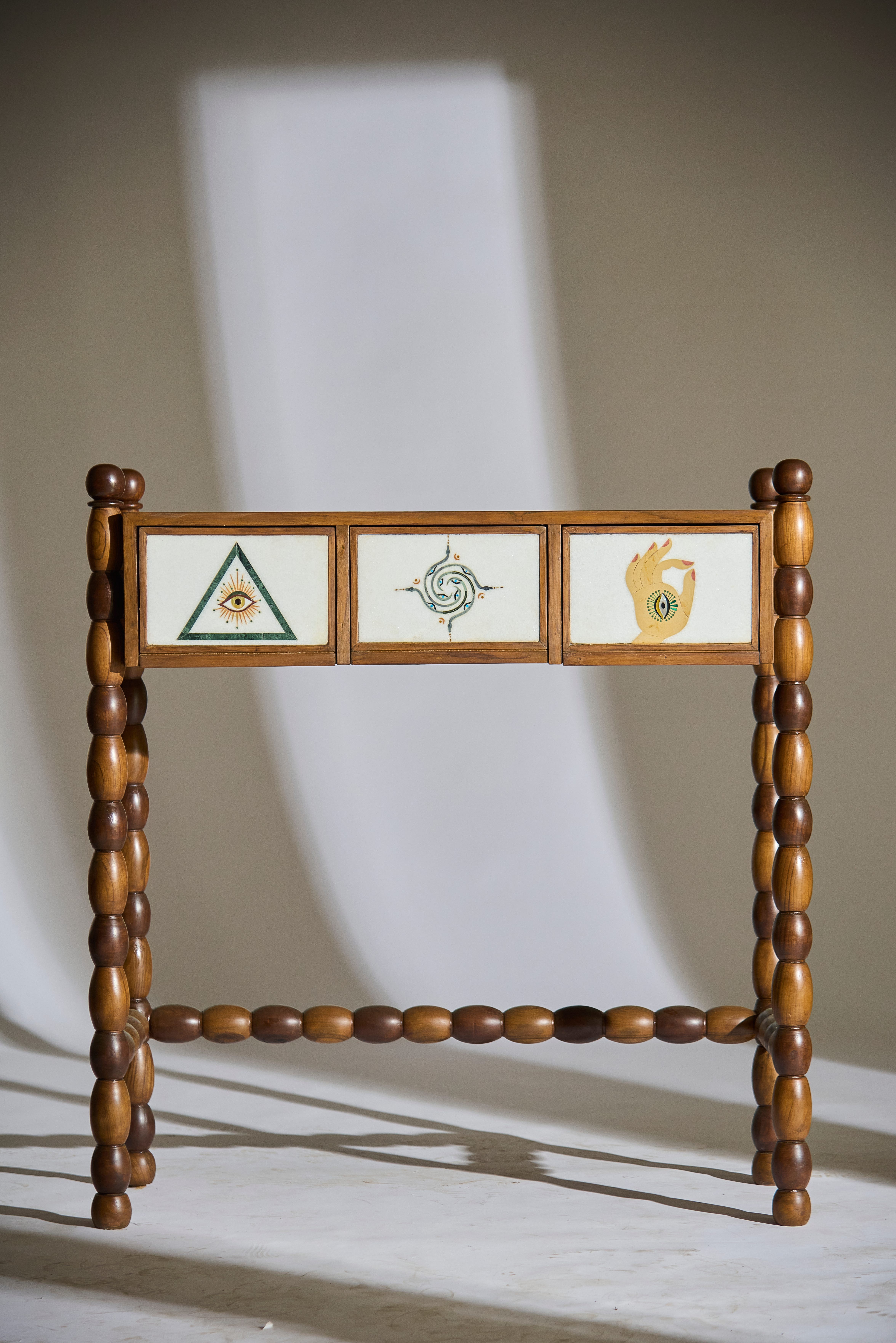
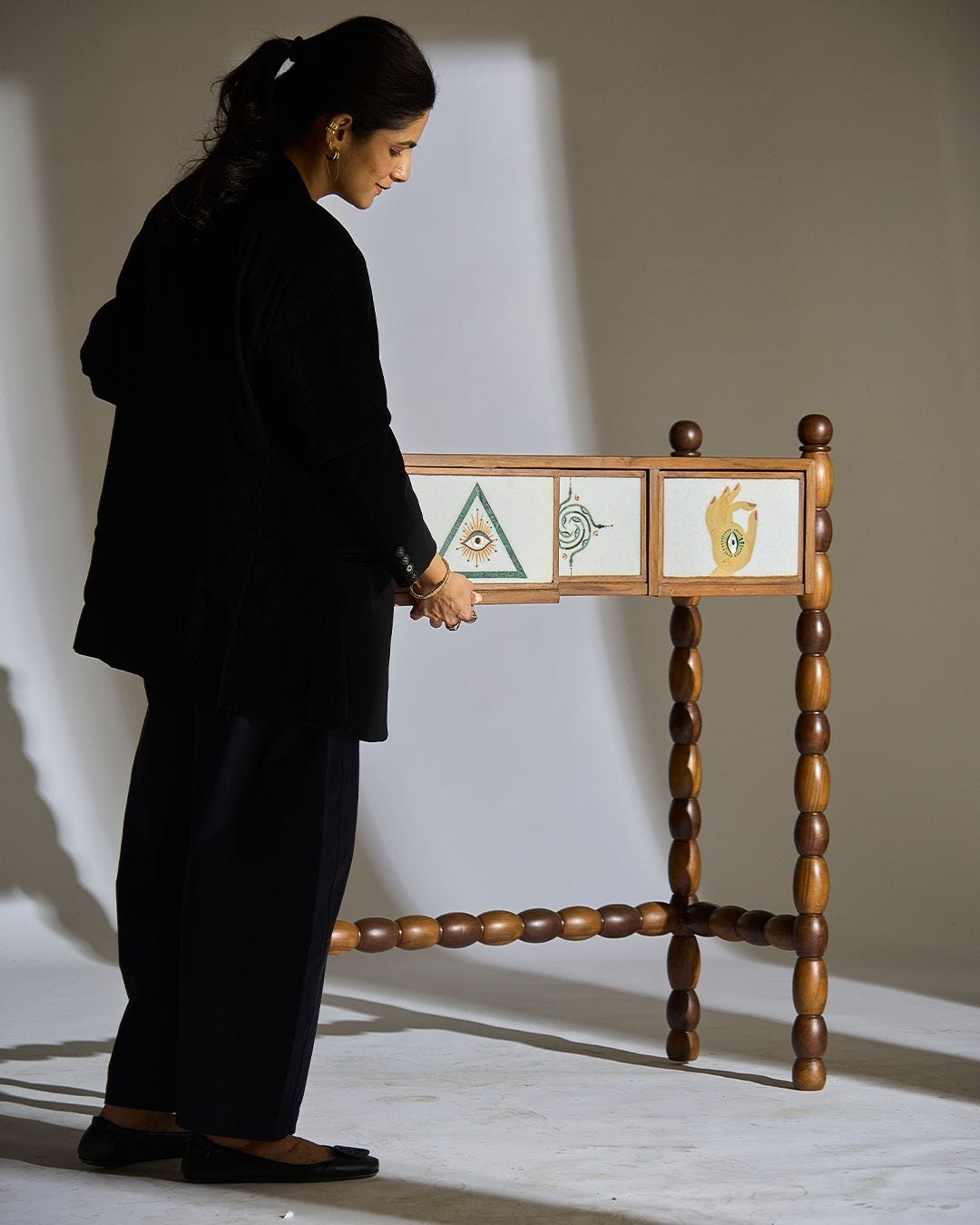
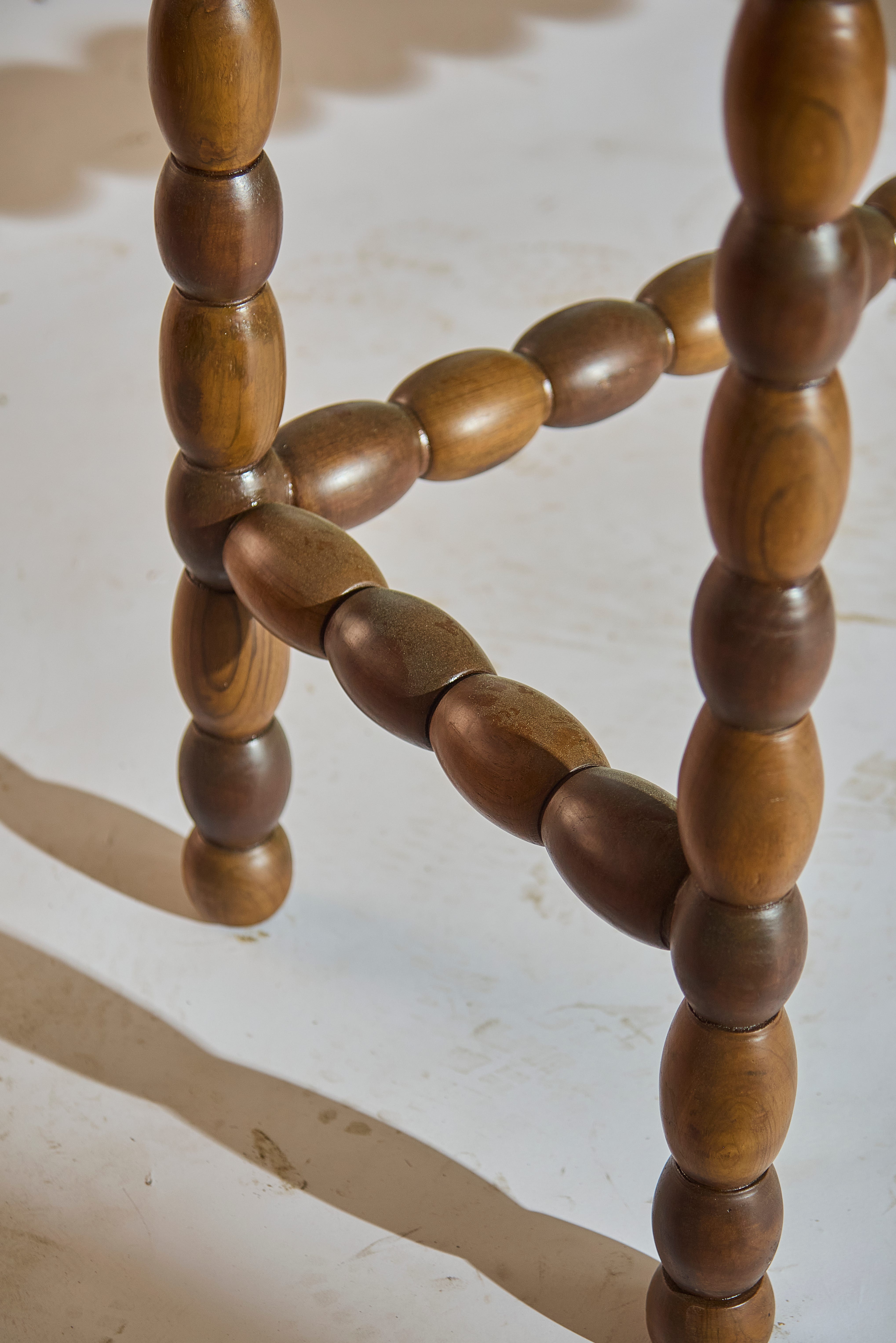
The piece holds this tension in its form. The spiritual and the material are not separated here they are brought into deliberate dialogue. The three marble inlay panels, worked in semi-precious stone by hands that carry a craft rarely practiced today, translate this sutra into a visual symbol as if ancient philosophy made tangible, meaningful, present in a room. The sculpted legs in teak, rising in the form of the Shivling, root the piece in one of India’s oldest acknowledgements of duality itself: the union of consciousness and energy, the formless made form.
A console table is a functional object. It exists in the material world, in the daily life of a home. And yet this one carries within it a philosophical proposition that the mind need not be stilled into silence, but healed into health. That the spiritual and the material are not opposing forces to be resolved, but a duality to be lived inside of, consciously, with intention.
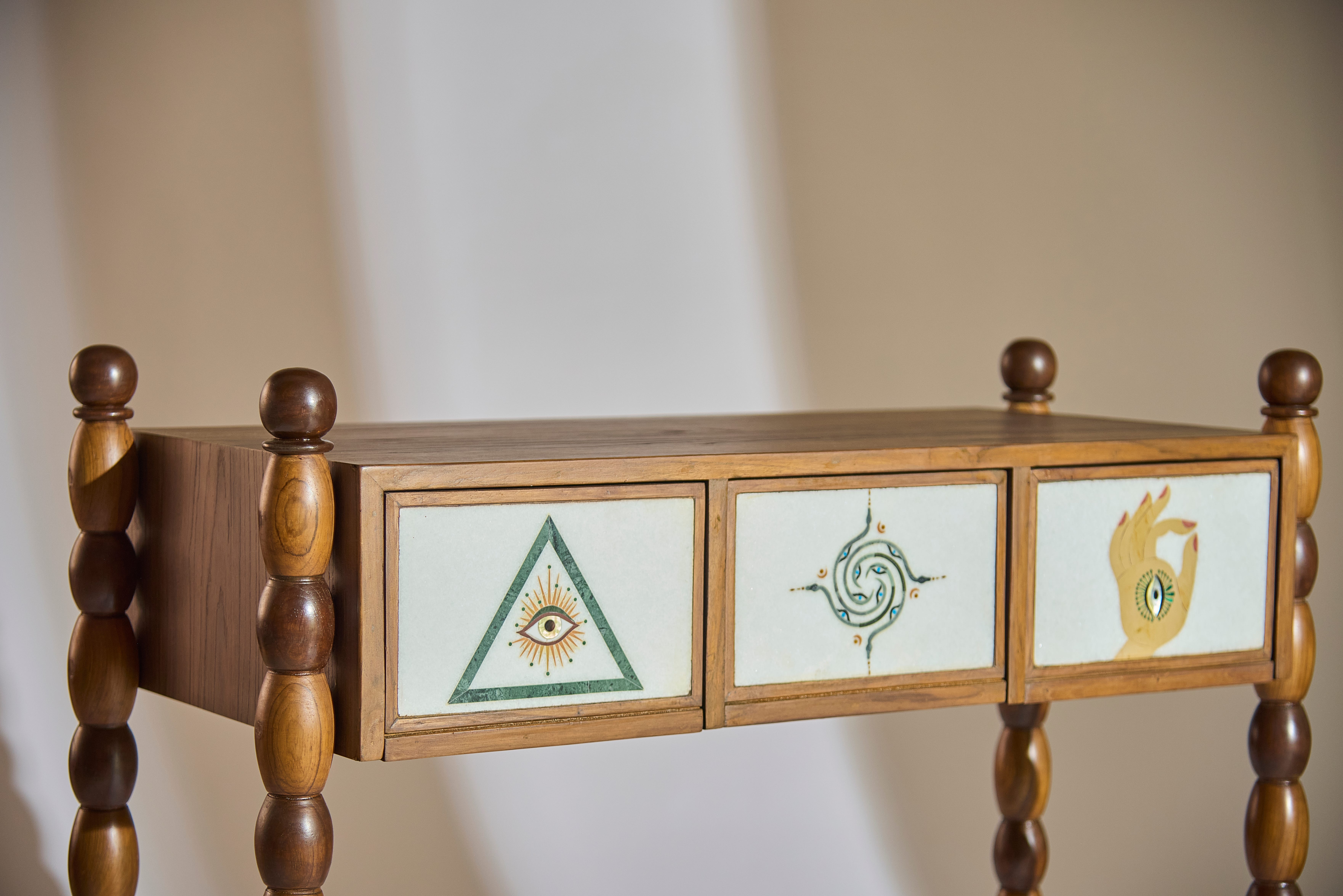
The piece holds something that is perhaps less visible but equally presents the tension between the ancient and the contemporary. The sutra it draws from is over two thousand years old. The hands that made it carry craft traditions that are centuries deep. And yet the object it has become is a console table, a form entirely of the present, designed to live inside a modern home, beside modern lives. It does not resolve this tension. It insists on holding both.
That is what the DUALITIES theme asked for. And that is what this object, quietly, answers.
Methodology & Rigor: The technical execution of your work requires a highly specific approach. Could you walk us through your methodology? How does your chosen medium and physical process actively reinforce your conceptual intent?
Design, for me, does not begin at a desk. It begins in lived experience in practice, in feeling, in the gut.
The Yog Chitta Vritti Niroga console was born during my yoga teacher training in Goa. It emerged not as an idea I arrived at intellectually, but as something that surfaced through the practice itself through the daily confrontation with the fluctuating mind, through readings that moved from book into the body, through the particular kind of clarity that comes when philosophy becomes something you are actually living. My inspiration is inseparable from my life from the rituals, philosophies, and spiritual frameworks I have grown up inside of.
Mythology, yogic wisdom, ancient traditions, spirituality are not references for me. Growing up surrounded by mythological stories and the rituals and traditions of India has had a great impact on how I design and conceptualise. A concept becomes an object when I have felt it long enough to understand what it truly means before it is born into form.
The translation of concept into material is where the craft enters and here, the choice of medium is intentional. It is argumentative. For this piece, the primary technique is Parchhikari, the ancient art of marble inlay with semi-precious stones that was brought to India in the 17th century when Mughal emperor Shah Jahan commissioned the Taj Mahal, introducing the craft for the first time. Today, the craftsmen are 5th generation artisans who carry the knowledge of marble inlay and continue the work behind the lanes of Taj Mahal.
The choice of Parchhikari was not incidental. While technology has enabled artisans to replicate these designs with advanced machinery, there is a certain intangible essence that only the human touch can bestow; it is in the imperfections, the slight deviations. That soul is present in this piece. The teak legs, carved in the form of the Shivling, carry the same logic. The material, the maker, the method, all of it must be in service of the concept. When they are, the object stops being a product and becomes something closer to what it set out to be: a meditation in form. This is what the console holds, the essence of stillness, of memory.
Cultural Context: Much of your practice challenges traditional boundaries within contemporary art. How do you see your current body of work responding to, or perhaps disrupting, the current cultural landscape?
India is not one culture. It is thousands and some more. Every few kilometres, the language shifts, the customs change, the gods take new names and new forms. There are rituals for the rain and rituals for the harvest, beliefs carried in the way a threshold is crossed or a river is addressed. There are communities like the Gond, who do not separate the spiritual from the natural for whom a tree is not a tree but a living presence, a river not a resource but a relationship. This extraordinary diversity, this ancient and still-breathing wisdom, is what Object Theory is built around.
The disruption I’m interested in is a specific one and it has less to do with the dynamics of the art world and more to do with a gap I find genuinely troubling.
There is a Scandinavian design language that the world recognises instantly. Clean line, considered material, a certain relationship between function and quiet. There is a Japanese design language restraint, negative space, the philosophy of ma, woven so completely into the object that you feel it without being told to. These aesthetics travel. They sit in a home in São Paulo or Seoul and they arrive with full authority, with a coherent worldview behind them. Nobody asks them to justify themselves.
Indian design does not yet occupy that place and I don’t think the reason is that we lack the depth. If anything, we have almost too much of it. The problem is that for decades, the dominant conversation has been about bringing Indian craft up to a global standard, cleaner finishes, more neutral palettes, less ornamentation, as though the path to the world stage requires first shedding what makes the work distinctly ours. It is often interpreted for export, simplified for legibility, decorative rather than substantive.
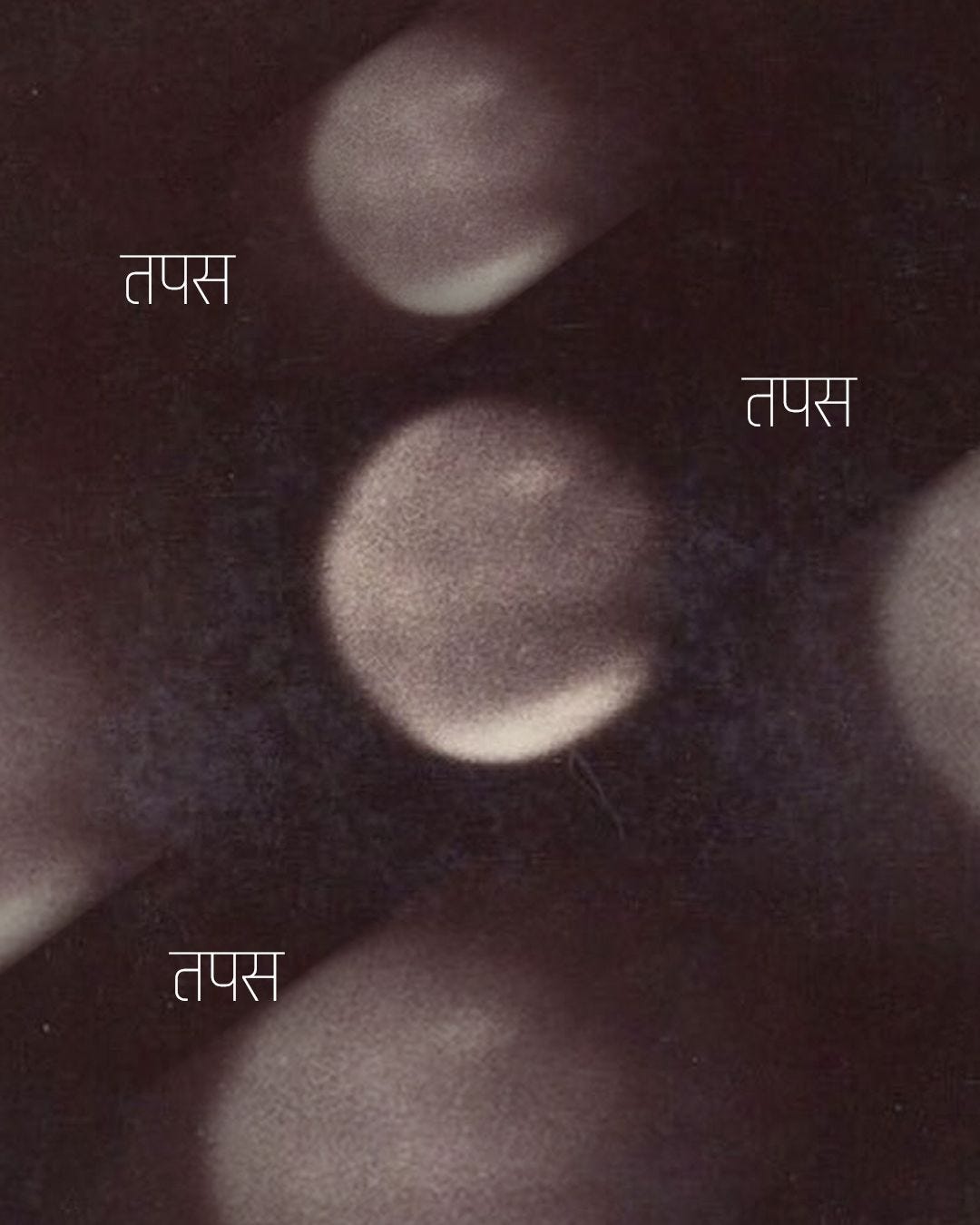
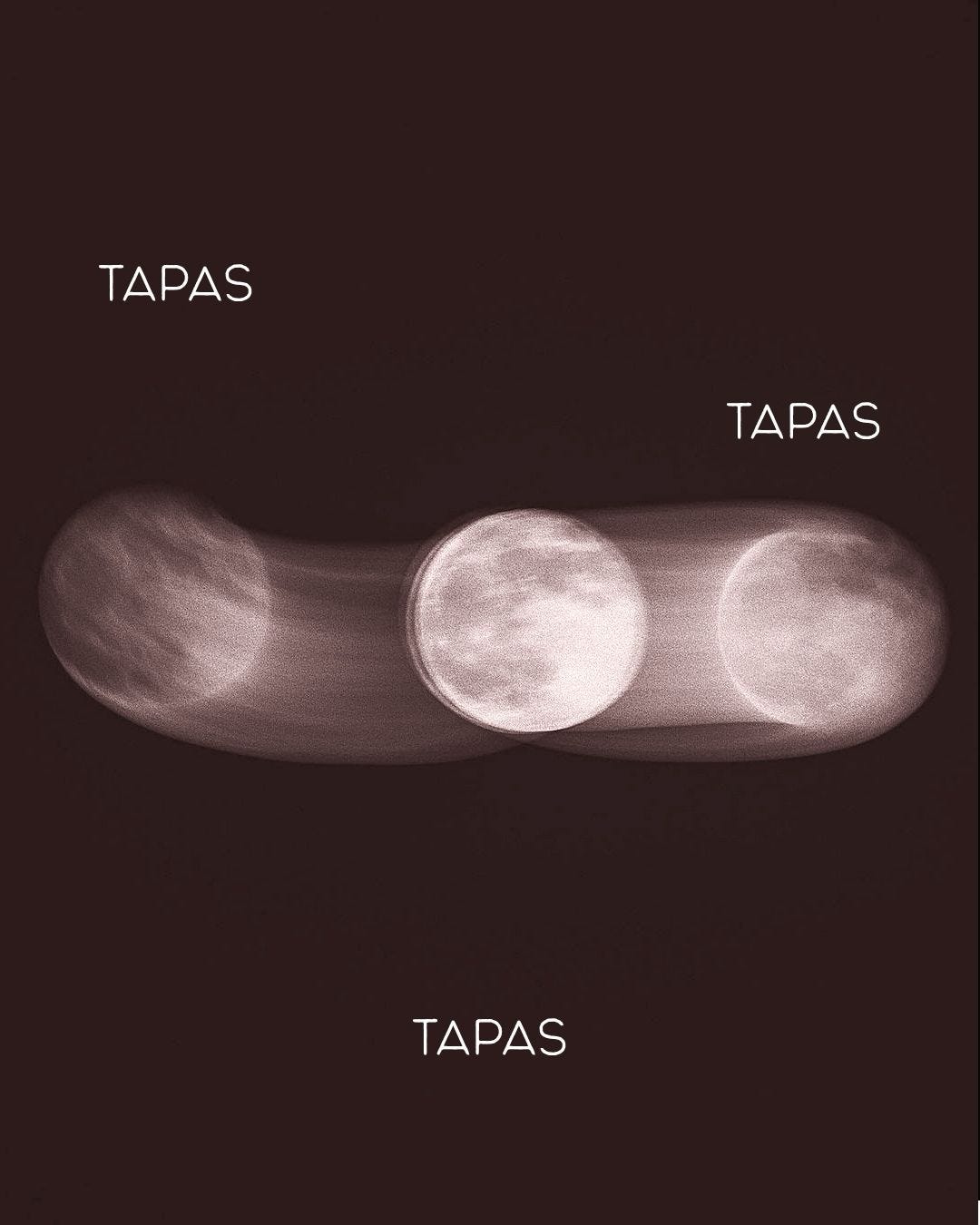
What Object Theory is trying to do is something different. Not adaptation. Not translation. The work I’m making - the Tapas collection, the Parchhikari console, the forms rooted in Shiva and yogic philosophy or the vase we have designed for Paris Design Week inspired from the Kathak dance form is an attempt to build a design language that is unmistakably Indian in its bones and yet needs no explanation to sit in any room in the world. The same way a Noguchi table doesn’t need to explain Japan to you. You simply feel that something true is present.
That is where I see the disruption. Not in rejecting the global market, but in refusing to arrive at it as a supplicant. We’re early in that project. But I think the objects, when they work, begin to answer it. We think in this manner, that something can be ancient in its root and entirely alive in its intelligence. That a craftsperson in Agra and a collector in Paris can be in genuine dialogue, not a transaction of the exotic. That spiritual philosophy is not ornament, it is the structure, the load-bearing wall.
The Trajectory: As an artist whose work is gaining critical international traction, how do you foresee your practice evolving next? Are there new mediums, scales, or theoretical territories you are preparing to explore?
The most honest thing I can say about where my practice is going is that I have no intention of fixing it in one place. Experimentation is not a phase we are moving through, it is our ethos, our brand language, the thing that keeps the work alive. Our tagline says it plainly: Experimental by instinct.
India offers too vast a universe of concepts, crafts, and mediums to limit ourselves to one. Each collection will ask a different question of a different tradition. The Gond community, Parchhikari, Naga wood carving, these are not a fixed vocabulary but entry points into a much larger conversation that India makes possible. There is enough here to spend several lifetimes exploring, and that is precisely what we intend to do.
The next material move is a deliberate contrast. From the density of wood, we move to ceramics and into a collaboration with artists from the Gond tribal community in Central India. The Gond cosmological tradition is one where the natural world is not a backdrop but language. Every bird, every tree, every river carries a story told without interruption for centuries. In that sense the shift is philosophically precise: from Tapas, the collection of the inner world, we move toward Gond - the outer world of nature, ritual, and ancient cosmology as lived experience. Alongside this, we are beginning a small collectibles section in metal craft. Intimate objects. Things you pick up, turn in your hand, and place back down differently than you found them.
The longer arc is toward design as experienced objects that inhabit space in more complex ways, and eventually, spatial work itself. We are also moving toward global collectors and institutional spaces, not by making the work more legible for export, but by trusting that genuine cultural rootedness travels on its own terms.
On a more personal level, something has shifted in how I relate to the practice. I have arrived at a place where the process holds more meaning for me than the finished object. The conversations with craftspeople, the slow translation of concept into form, the weeks or months a piece takes to come into being that is where I now live as a creative. It teaches me things that have nothing to do with design: flexibility, patience, the wisdom to pivot, the courage to stay. It gives me life, even as I pour life into it.
And when a piece is complete, I find I am able to part from it with a kind of finality. It has its own life now and no longer needs mine. Completing a piece, for me, is something close to a necessary death: a clean separation. The work goes out into the world. I return to the process.
That, in the end, is what Object Theory is not a fixed body of work, but a practice in permanent becoming. Rooted deeply enough to travel anywhere. Curious enough to never stop.