

By Koh Ting Jia
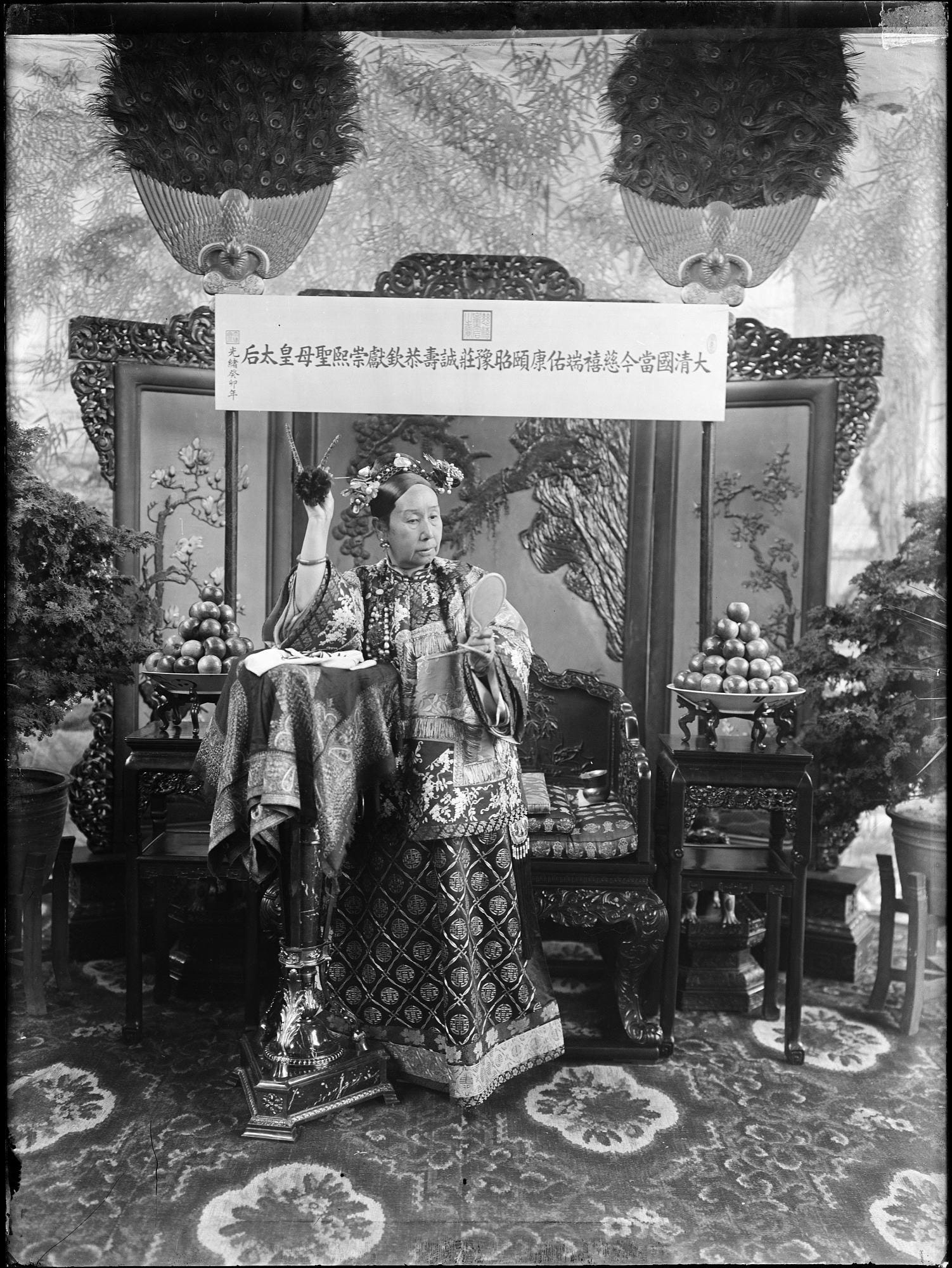
Emperor Dowager Cixi, photographed by court photographer Yu Xunling in 1903
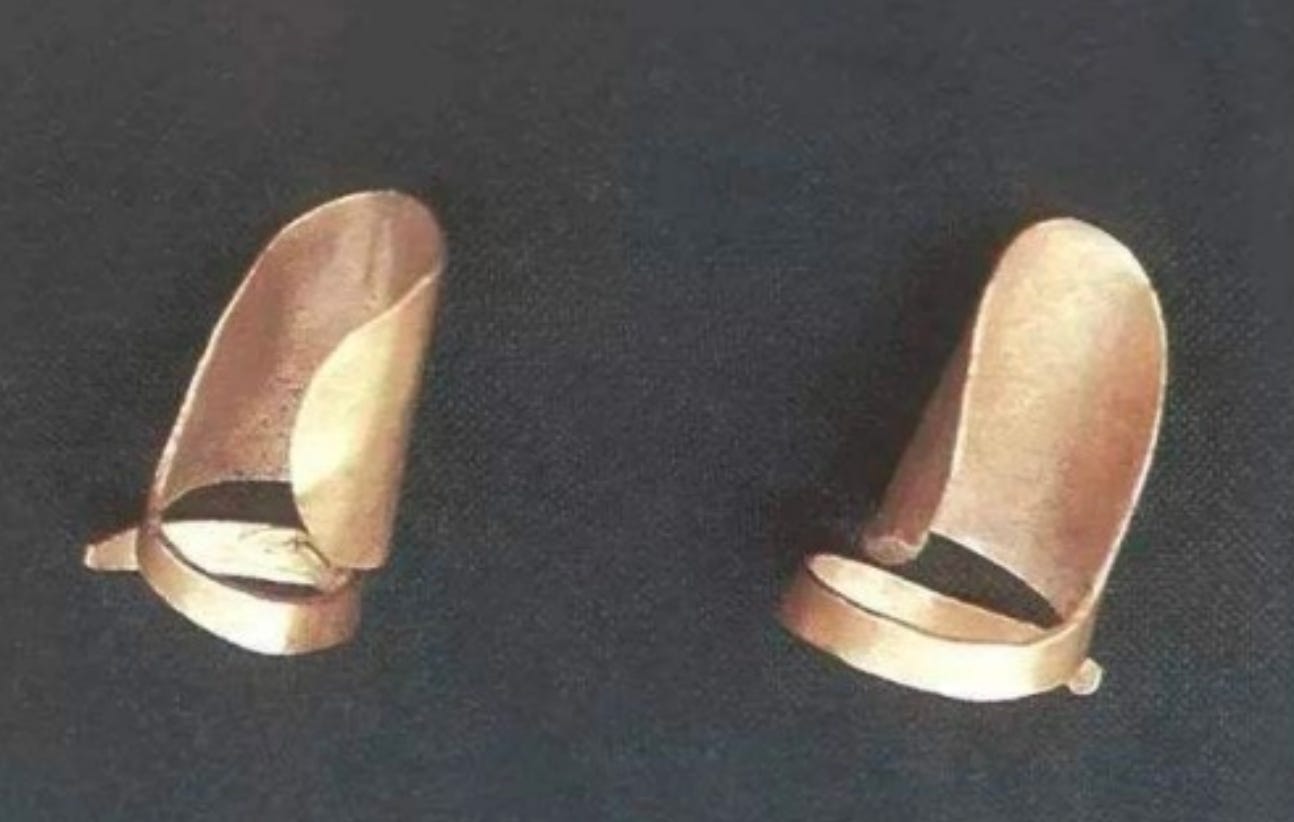
Dawn approaches and Emperor Dowager Cixi’s team of beauticians are performing her five-step daytime nail routine: “泡沫拍吸戴“ — soaking, lathering, patting, drying and wearing. As a prerequisite, her nails were (impractically) grown for years to an astounding length of more than four centimeters. She dons her three-inch long gold filigree set with jade, dragon carvings, and kingfisher feather. Worn on the fourth finger and the pinky, sometimes on both hands at once. The Qing dynasty nail guard (护甲套, hùjiǎtào) was not jewellery in the decorative sense. It was a ranking system worn on the fingertips. Gold for the imperial family and high-ranking concubines. The more elaborate the craftsmanship, the higher the wearer‘s position. Empress Dowager Cixi held exclusive rights to dragon and phoenix carvings on hers. Why did the Qing dynasty turn impracticality into a marker of prestige?
Historical Background of the Qing Dynasty Nail Guard
Across the dynasties, fingers and hands were viewed through the lens of beauty and class. The Tang Dynasty poet Han Jian composed a poem titled “Ode to the Hands” artfully praising a woman’s hands: “Wrists as white as jade, skin as rosy as a bamboo shoot; tuning the zither and threading the needle, their slender tips gleaming.” (“腕白肤红玉笋芽,调琴抽线露尖斜”). Similarly, the Book of Songs describes fingers as “hands like tender shoots,” emphasising that the beauty of traditional fingers lies in their long, white, and slender shape. To exude beauty and elegance, one ought to grow long nails.
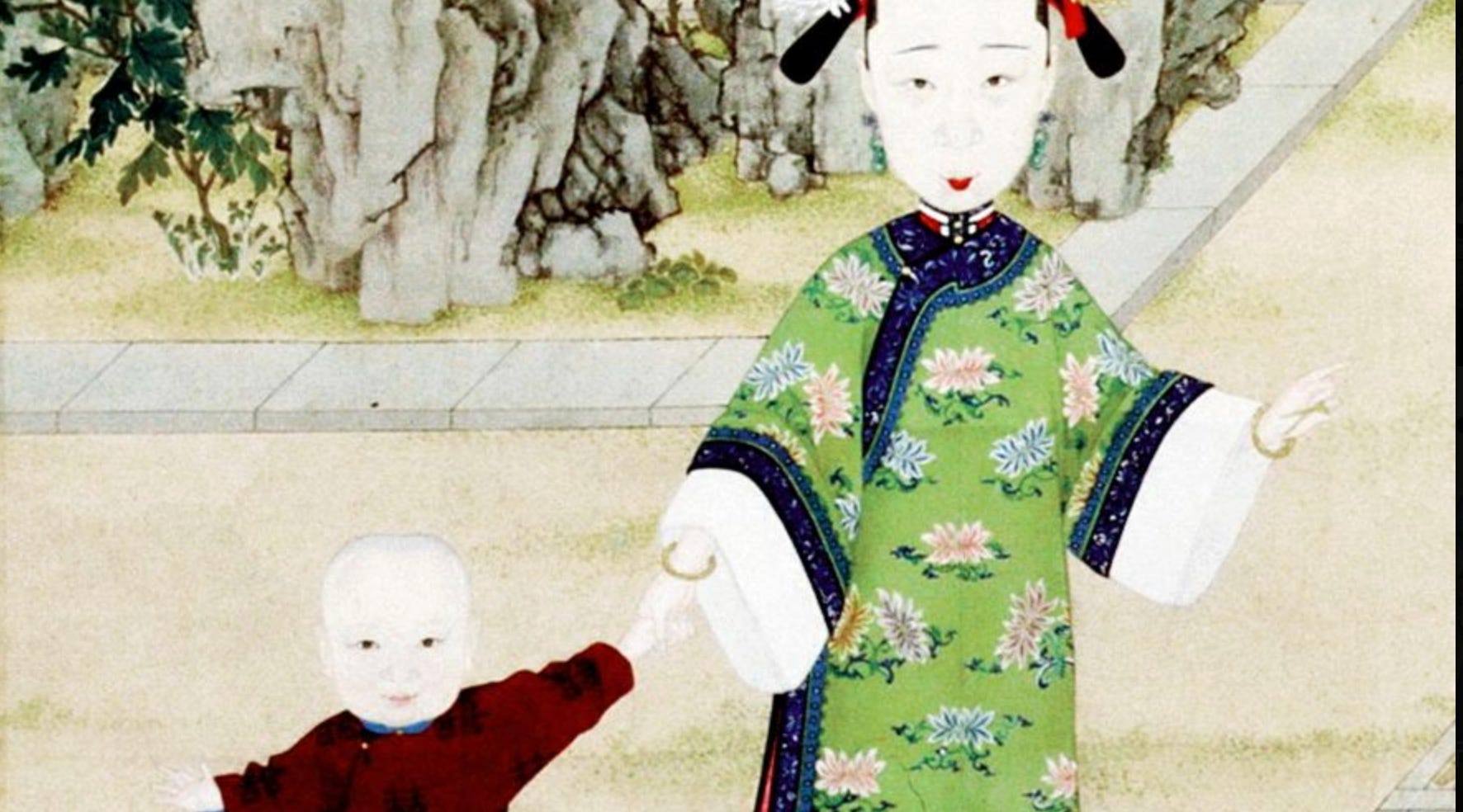
“喜溢秋庭图”: Consort Jing wearing a Nail Guard
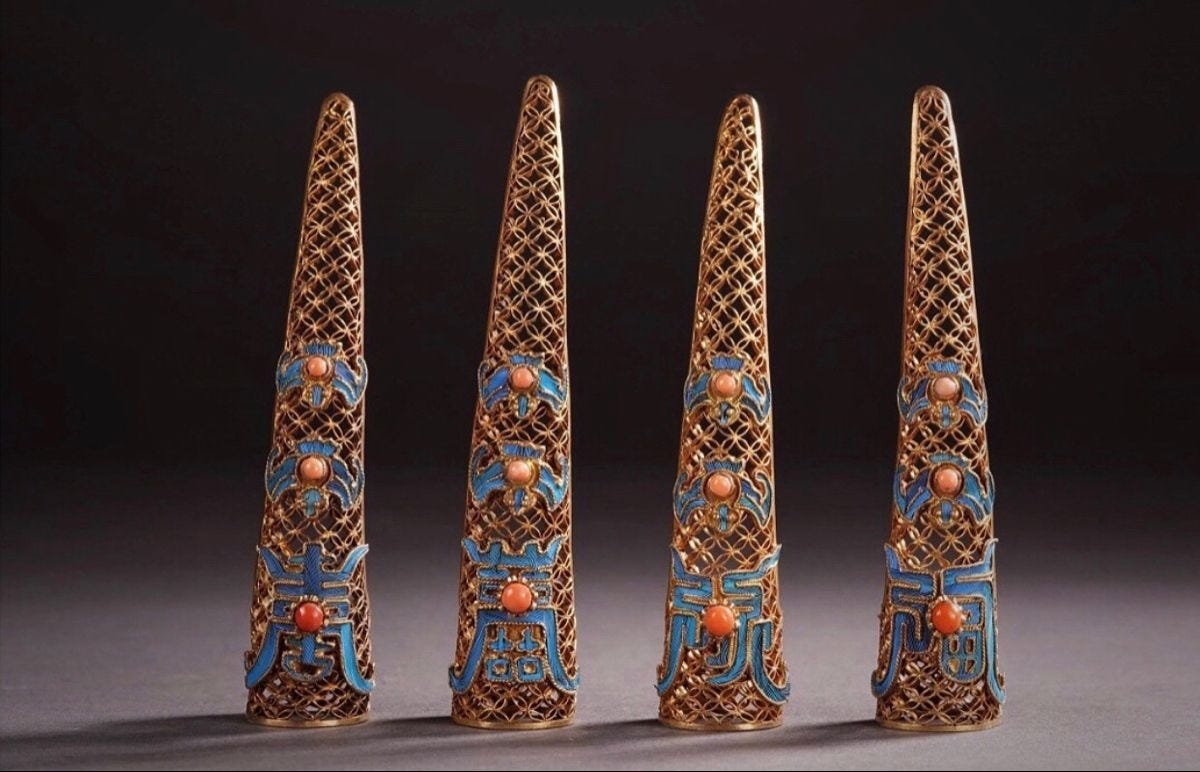
While the Qing dynasty nail guard gained eminence through the Qing dynasty (as reflected in contemporary historical soap operas with the emperor’s harems), it was rooted in the Ming dynasty. However, it was not until the Qing dynasty that its usage flourished, with its designs evolving to be more elaborate. Generally, nail covers are between 2.6 and 14.7 cm in length, and are made in pairs, but asymmetrical wearing is popular. During the Qing dynasty, nail covers were often made using a combination of ten different patterns. For example, one cover could feature kingfisher feathers, double happiness signets, and inlaid coral beads, combining three craft techniques.
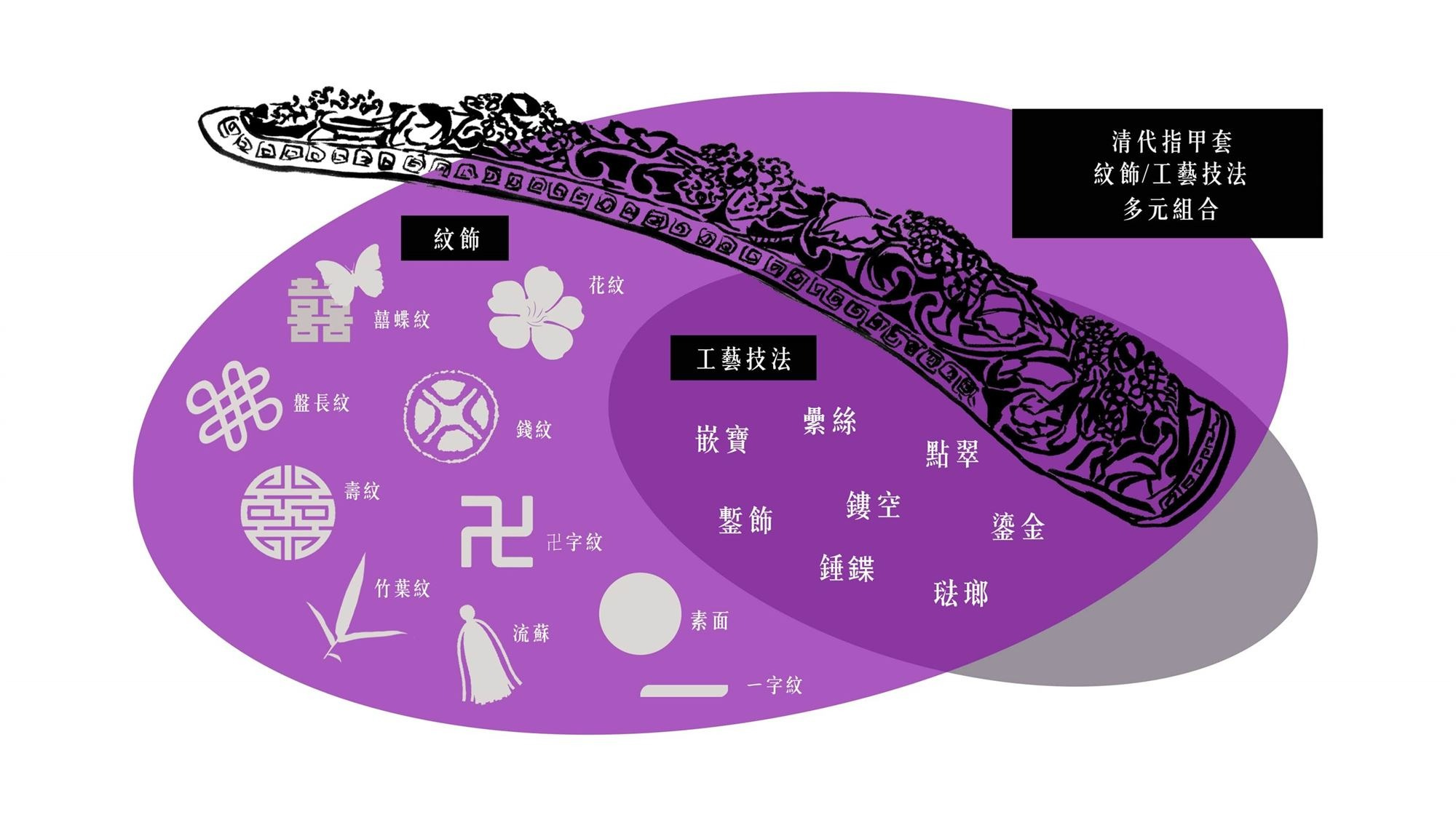
Instances of the various motifs on the nail guard
Just as the Chinese language is symbolic and represented by logographs, the nail guard was rich in symbolism too. One could find it engraved with Chinese knots, bamboo leaves, the longevity pattern (“寿纹”), Coin pattern (“钱纹”), and the Double Happiness Butterfly pattern, tiding in blessings for the future. (Refer to Figure 2 and 3).
What the nail guard tells us about classism, fashion and manufactured distance.
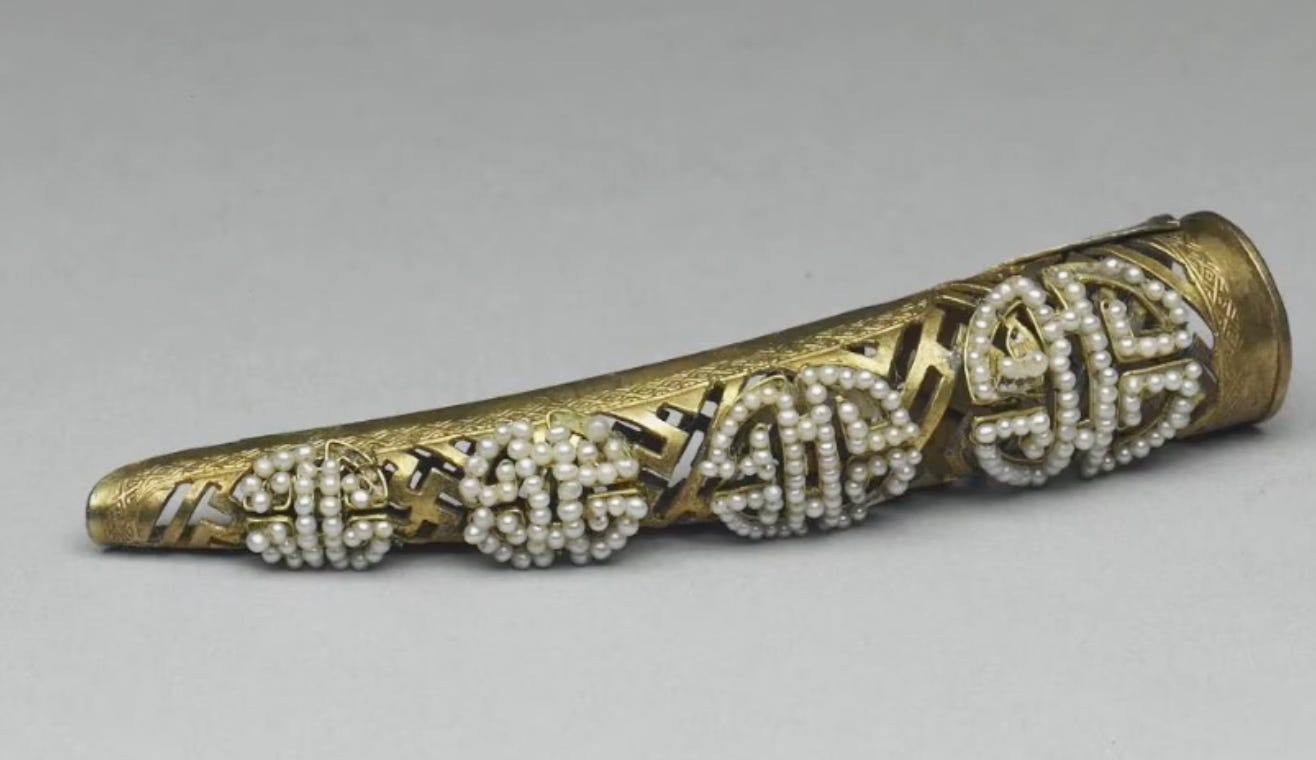
Nail Guard adorned with Pearls in the the longevity pattern (“寿纹”)
Typically, Imperial women practiced the arts (calligraphy, music, painting, embroidery, etc). leaving the remaining fingers bare allowed them to continue. This was very important as being well practiced in the arts was a way to gain imperial favor and thus prestige. Within the contest of Empress Cixi’s reign, the nail guards of the Qing dynasty implied that the wearer does not need to work, protecting not only the nails but also one’s social class. The significance of Empress Dowager Cixi’s long nails transcended that of ordinary nobles. They were not only for protecting the nails, for aesthetic pleasure, and for flaunting her class, but also for their emotional connection to wielding supreme power.
The nail guards therefore did more than advertise wealth. They manufactured a visible distance from labour itself. Their very impracticality became the point. Every movement, from eating to dressing to writing — required assistance or adaptation, transforming dependence into a marker of privilege. The body itself became evidence of exemption from ordinary life.
Sociologist Thorstein Veblen’s Theory of Leisure Class posited that individuals use conspicuous consumption to signal their class status. In the nineteenth century, the upper echelons wore sartorial clothes items, which implied more discomforting clothes. Haute couture and stiff-fitting clothes was a visual sign that the individual was not suited to more manual labour, and that the wearer had sufficient capital to afford items beyond necessity. Simmel’s Fashion echoes this, claiming that “... fashion represents nothing more than one of the many forms of life by the aid of which we seek to combine in uniform spheres of activity the tendency towards social equalization with the desire for individual differentiation and change.” In this tension between conformity and distinguishing oneself, the nail guard could be continually weaponised to reproduce a noble’s exquisite taste.
The Gendered Dimension of it all
Nail guards were never merely indicators of wealth, they were also instruments in which ideals of femininity were performed and reproduced. In late imperial China, elite women were imagined less as economic contributors than as the aesthetic embodiment of a household’s prosperity and moral refinement. Thorstein Veblen’s observation that women became the “chief ornament” of the household is particularly apt here: the ideal aristocratic woman was valuable precisely because she appeared detached from productive labour.
Like many forms of elite dress, nail guards imposed a subtle discipline on the body. Their exaggerated length rendered many everyday tasks impractical, transforming physical incapacity into visible proof of privilege. The body itself became evidence of leisure. Every gesture—from lifting a teacup to turning the pages of a book—had to be slower, more deliberate, and often assisted. In this sense, nail guards did more than signify status; they cultivated a performance of refinement in which elegance was inseparable from dependence. Femininity was measured not by what a woman could accomplish, but by what she could convincingly appear never to need to do.
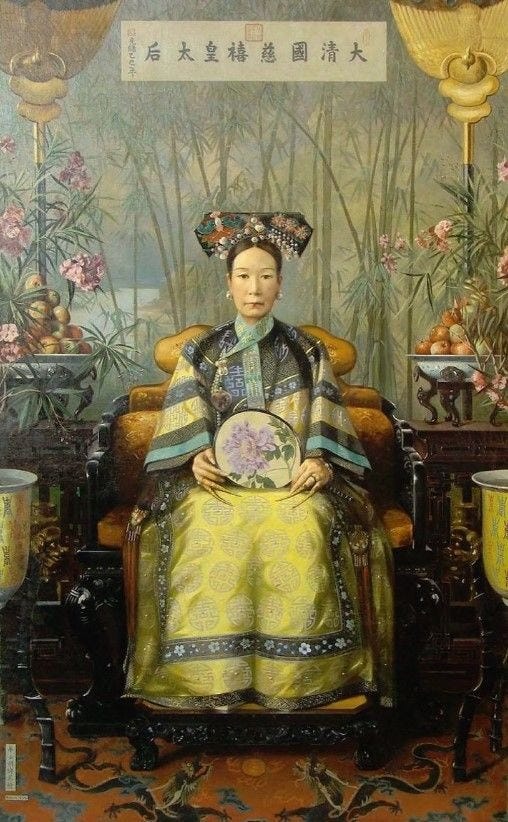
A portrait of the Empress Dowager Cixi (1835-1908) painted by Katharine Carl (1862-1938)
Yet, in the case of Cixi, it was also a moment of empowerment in the context of the time. She acted reflexively, to reshape the nailguard not simply as an object that signifies, but also dignifies. In Simone de Beauvoir’s “The Second Sex”, she claims that women are viewed as the other with respect to men. To combat this, a woman must combat the inequalities of the patriarchy “reflexively”, acting in subversion of societal standards. Empress Dowager Cixi held exclusive rights to dragon and phoenix carvings on hers. Wearing guards on both hands simultaneously communicated the highest status of all: that neither hand was needed for anything.
This does not mean that Cixi escaped the gendered logic embodied by the nail guard. Rather, she demonstrated how symbols created to discipline women could also be strategically reinterpreted as instruments of power. Her authority was exercised not outside the visual language of femininity, but through it. The nail guard thus becomes an object of contradiction: at once a technology of patriarchal control and a medium through which one of China’s most powerful women projected imperial legitimacy.
Transcendence of the Qing Dynasty Nail Guard
The Qing nail guard belongs to a much longer history of elite fashion in which inconvenience becomes desirable precisely because it is inaccessible. Corsets that restrict breathing, powdered wigs requiring hours of maintenance, towering platform shoes that hinder walking, or luxury handbags too delicate for everyday use all share the same underlying logic. Their value lies not in utility but in demonstrating freedom from it. This begs the question, has the essence of the Qing nail guard transcended itself in reality today?
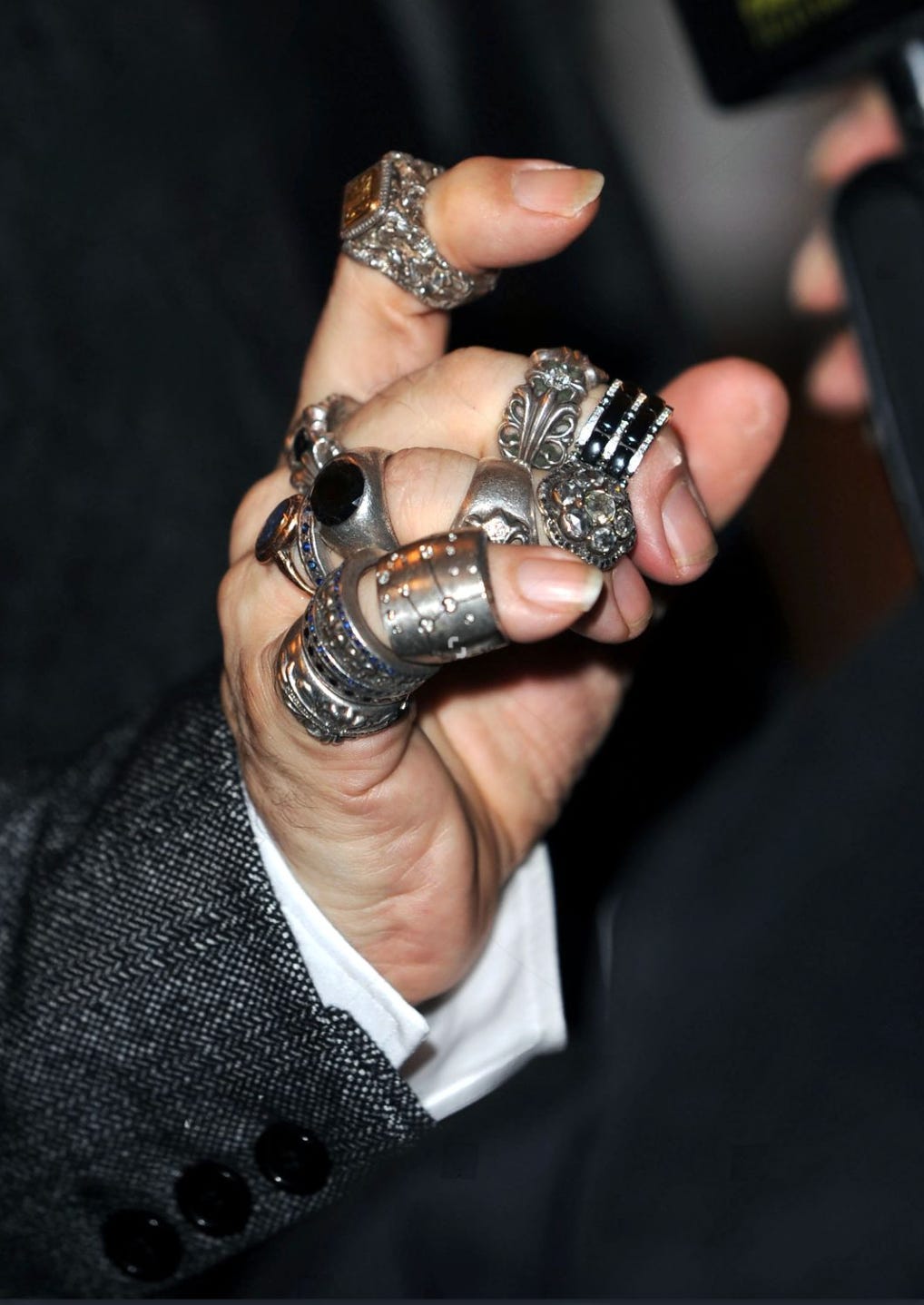
Karl Lagerfield’s Nail Rings
While people of the contemporary age no longer grow long nails, the practice of nail care has retained, with nail artists creating coffin acrylic nails. Moreover, international fashion labels have also taken to launching fingertip decorative jewelry. For instance, Karl Lagefield had once designed bespoke fingertip rings for Chanel’s haute couture show. In 2019, Burberry and Nike similarly commissioned Unistella to craft brand-specific nail guards.
Ultimately, as the goalposts for class distinction evolve, so too will the essence of the Qing dynasty nail guard. While its material elements may change, its luxury will not: Luxury has never been about beauty alone, but about making power visible.