


Nazira Karimi, photographed by Zhuldyz Valeyeva
Artist Bio
Nazira Karimi is an artist and filmmaker based in Almaty, Kazakhstan. Her practice studies the political-historical and environmental transformations of Central Asia, with a focus on the aftershocks of war and broader regional dynamics. She works across film and installation.
Her work has been exhibited in Turandot: To the Daughters of the East, a Collateral Exhibition of the 61st International Art Exhibition of the Venice Biennale (2026); the inaugural Bukhara Biennial Recipes for Broken Hearts (2025); Foreigners Everywhere, the 60th International Art Exhibition of the Venice Biennale (2024); and documenta fifteen, where she contributed to the public program of the DAVRA Collective (2022).
Nazira studied scenography and painting in Almaty and earned her Magistra degree in Vienna in 2024.
She is the editor-in-chief and co-founder of Ruyò Journal, and a founding member of MATA Collective, and an Advisory Board Member of Tamyr Central Asia Art Lab (2026–2028).
Your piece featured in the DUALITIES exhibition navigated complex tensions. Can you dissect the conceptual framework behind this specific work and how it responds to the exhibition’s overarching theme?
It is a seven-part video installation “Hafta” that approaches the idea of extinction not as a single historical moment but as a continuous process shaped by the colonisation of Central Asia. Within this framework, I interweave the history of the region with my own family history.
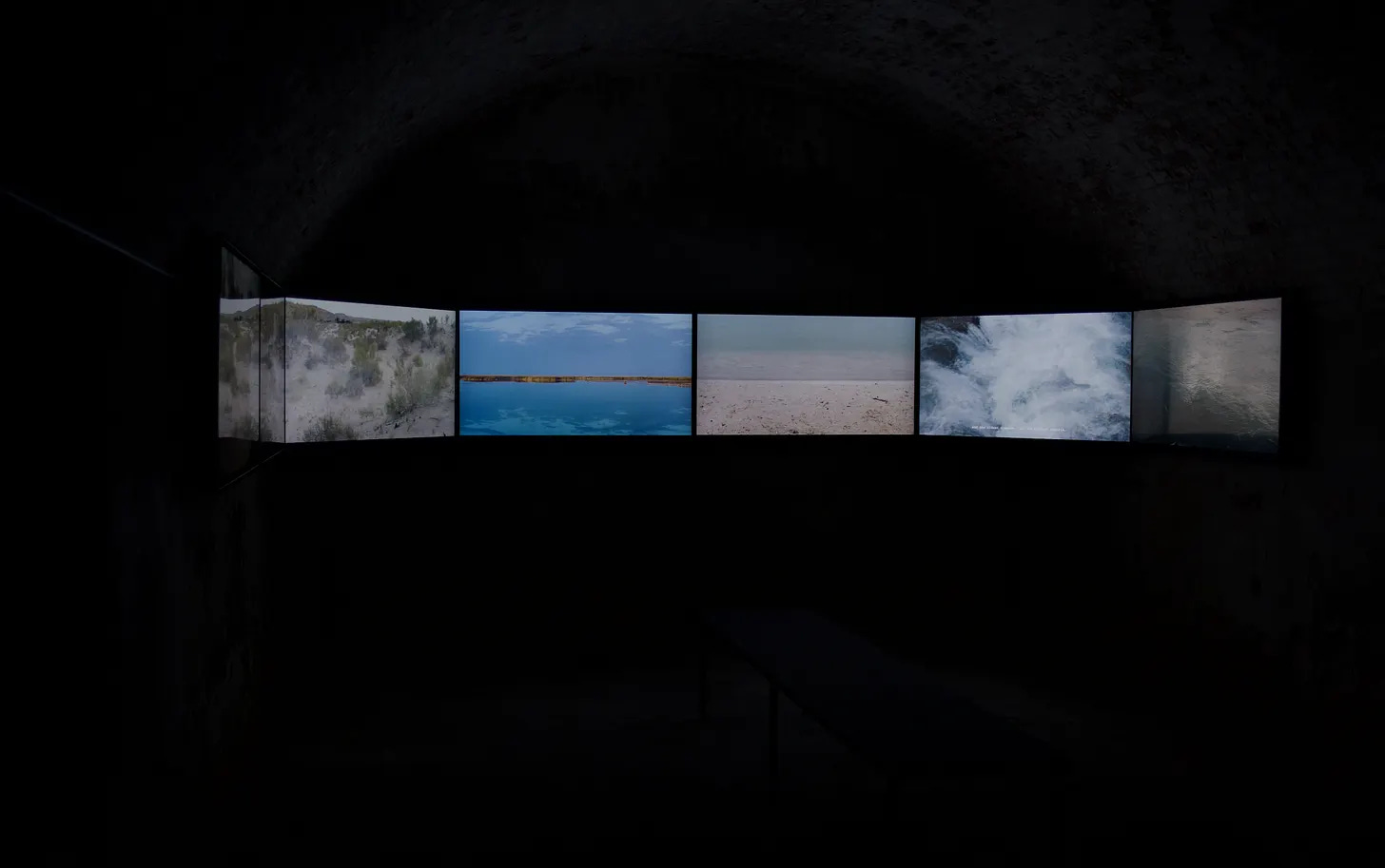
Hafta, photographed by Daniyar Jussupov
The work consists of seven interconnected chapters, each dedicated to one of the seven maternal figures in my lineage. Because parts of their biographies were absent or inaccessible, the work inevitably moves into a space of fiction. In this sense, imagination and fiction become necessary tools rather than aesthetic choices. I rely on poetic reconstruction.
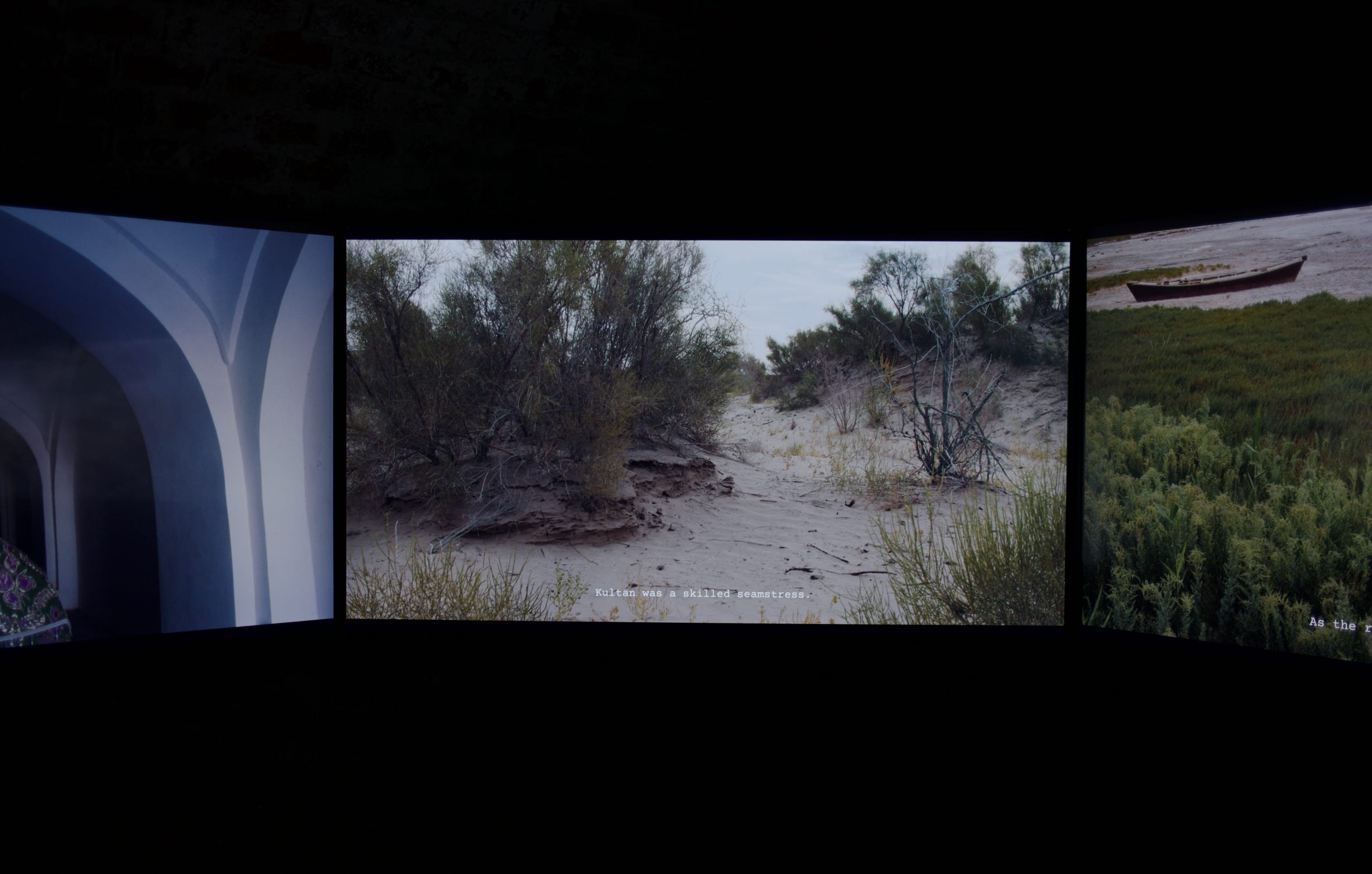
Hafta, photographed by Daniyar Jussupov
The film was created through a journey I undertook with my mother, Mariam. She was born in Tajikistan after her family fled Kazakhstan, and later she returned with me and my sister to Kazakhstan. This circular movement between geographies became central to the work. Traveling together, we were tracing not only family memory but also the physical remnants of lost ecologies. The landscapes became historical registers of migration. The installation is structured so that seven simultaneous screens allow the viewer to experience these narratives overlapping. This spatial arrangement is important: it suggests a possibility of reparation. Water, both literal and symbolic, becomes a central motif of restoration, returning to places it once withdrew from.
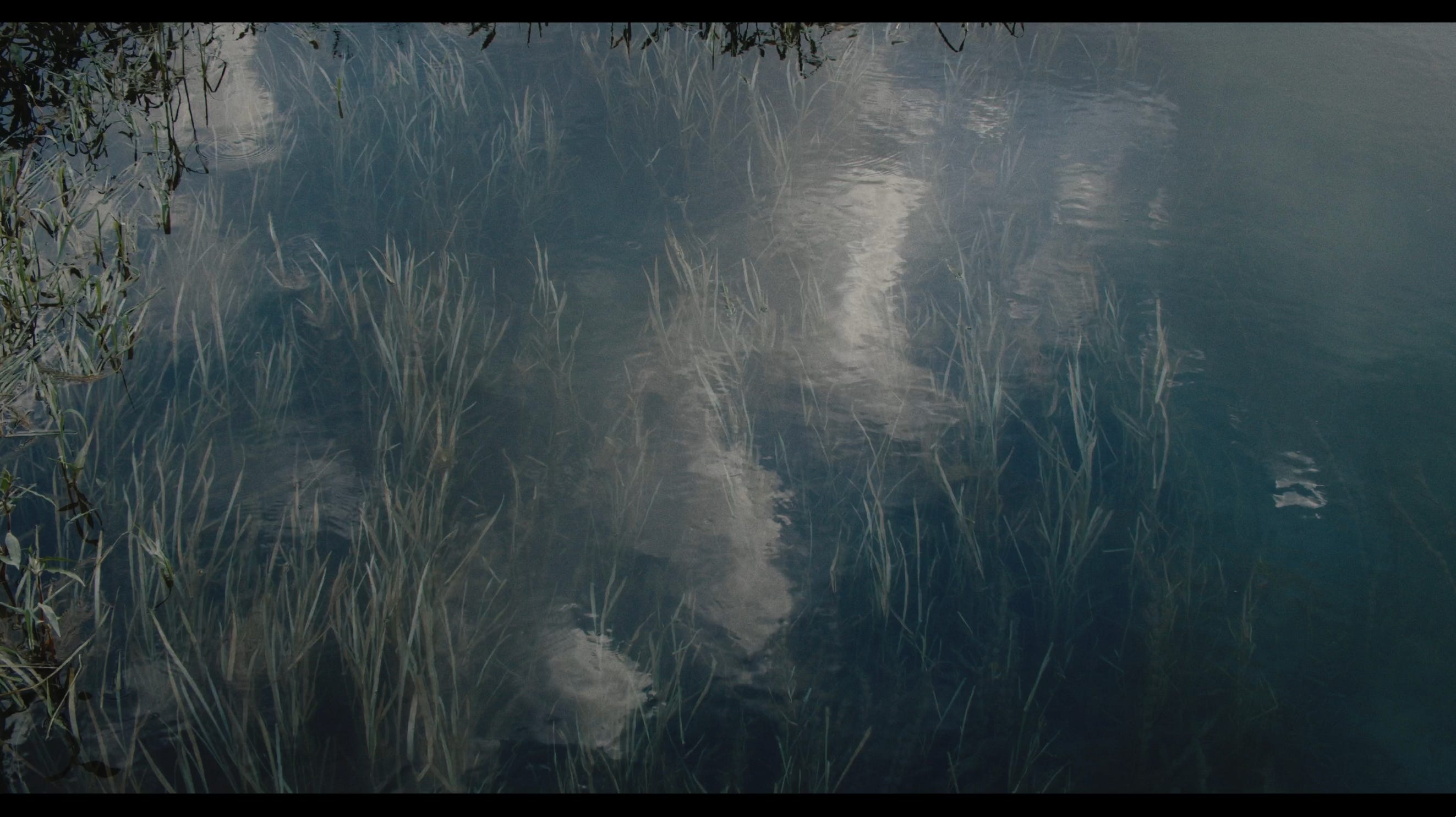
Nazira Karimi, Hafta, 2026 (still)
Within the framework of DUALITIES, the work moves between history and fiction, and between loss and restoration, absence and presence. The duality is not resolved but held open: truth and imagination coexist as equally necessary modes of narration. This becomes especially important when dealing with erased or under-documented histories, where fiction is not a departure from truth but a way of accessing it.
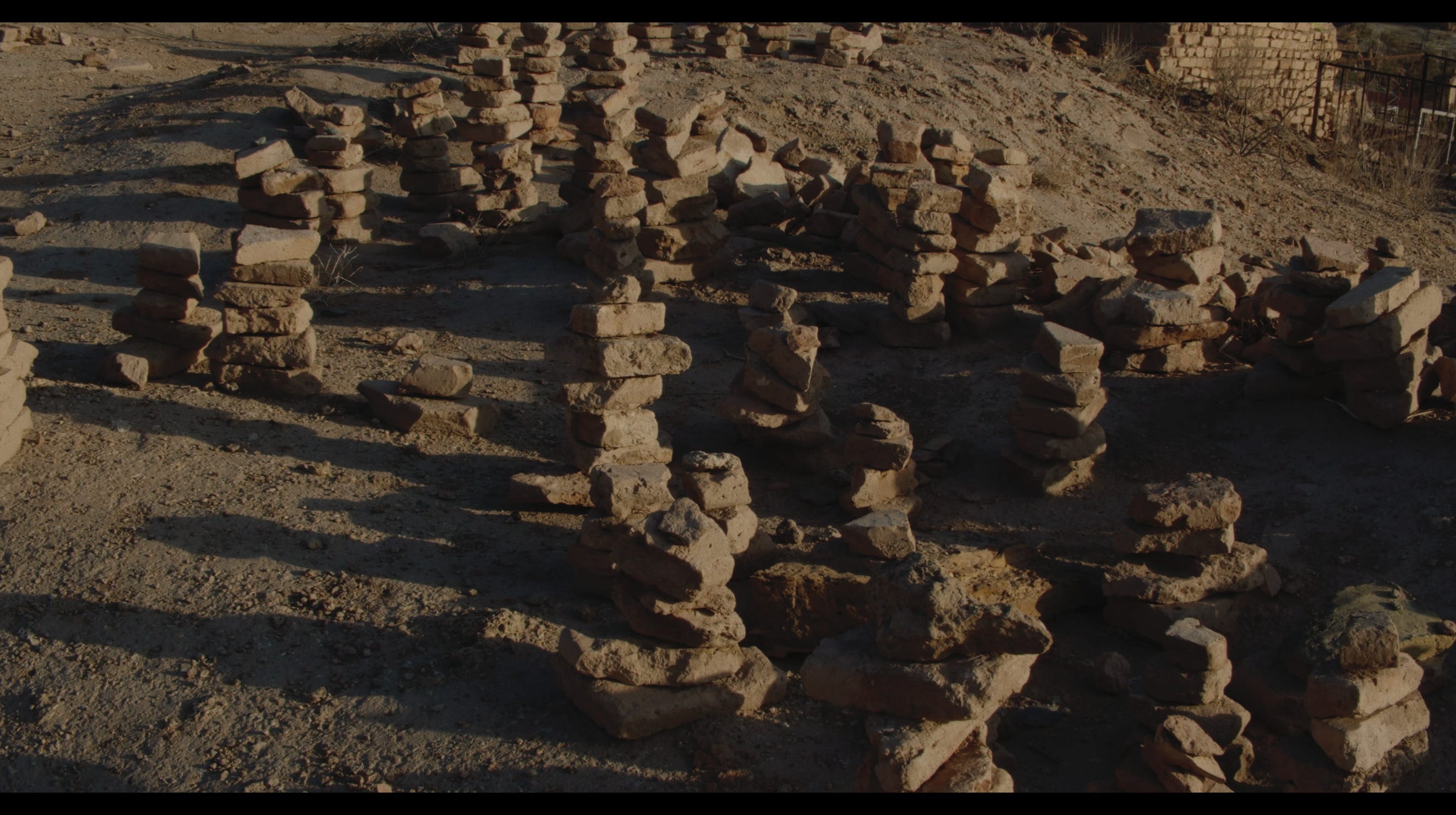
Nazira Karimi, Hafta, 2026 (still)
The technical execution of your work requires a highly specific approach. Could you walk us through your methodology? How does your chosen medium and physical process actively reinforce your conceptual intent?
For HAFTA, the technical structure of the work evolved directly from its narrative logic. I initially created it as a single linear film composed of seven parts, and I realised that each of the seven stories required its own autonomous space. This led me to develop it as a seven-channel installation, where all narratives unfold simultaneously. This decision was not only formal but conceptual. Placing the seven channels side by side felt closer to the logic of memory, genealogy, and time.
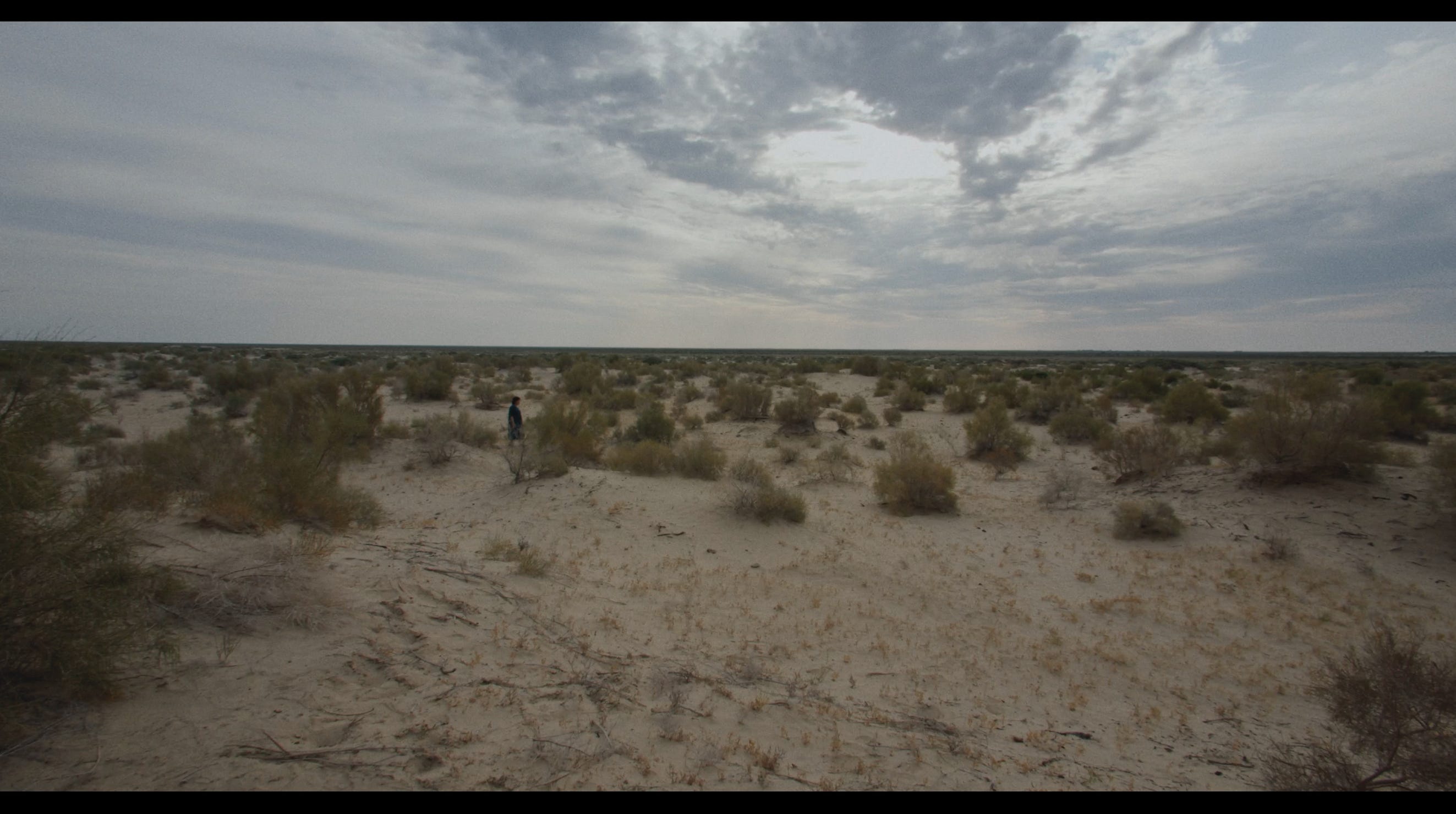
Nazira Karimi, Hafta, 2026 (still)
More broadly, my methodology is intuitive and image-led. Before working with film and installation, I was trained as a traditional painter and scenographer, and this background continues to shape how I think. I approach each work as a form of visual narrative or what I sometimes call “visual poetry”. I see the structure before I fully articulate it in words. I also film and edit the films myself because I need to maintain continuity between vision and execution. The narrative always determines the form, whether the work becomes a single-channel film, a multi-channel installation, or something else entirely. The medium is not chosen in advance; it appears from the logic of the story itself.
So in that sense, methodology and concept are not separate stages. The form is already contained in the narrative, and the technical decisions are a way of making that structure spatial.
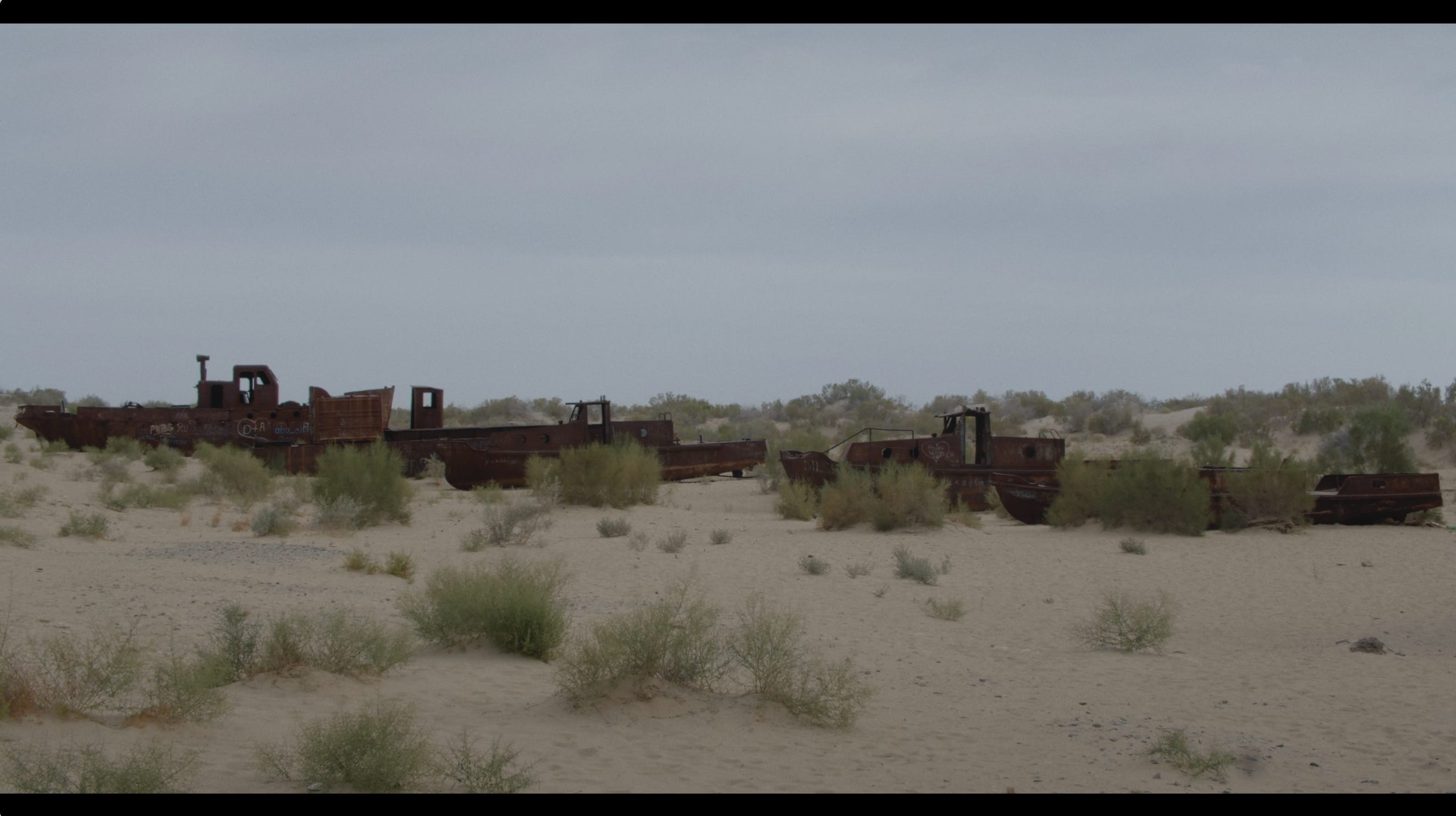
Nazira Karimi, Hafta, 2026 (still)
Much of your practice challenges traditional boundaries within contemporary art. How do you see your current body of work responding to, or perhaps disrupting, the current cultural landscape?
I’m not fully convinced that artworks, on their own, can disrupt a cultural landscape in any direct or immediate sense. What I can say is that when my work is shown in European contexts, it often functions as a form of re-education or reframing. There is still a lack of awareness about Central Asian histories, as well as about the complexities and violences of the Soviet imperial past. In that sense, the work opens up space for narratives that are often simplified in European cultural discourse.
However, I don’t see this as the only, or even the most important, part of my response to the current cultural landscape. A significant part of my practice is a collective and infrastructural work within Central Asia itself. I am part of the Almaty-based MATA Collective, where we are currently developing projects such as MATAZAÑ, which focuses on improving working conditions for art workers in Kazakhstan. This includes practical tools like a booklet for art workers that outlines rights, labour conditions, and aims to increase legal literacy within the cultural field.
In parallel, I am a co-founder of Ruyò Journal, a platform where Central Asian practitioners can publish, exhibit, and share their work and are compensated for their labor. Beyond visibility, it is also about building an ecosystem, creating paid opportunities, while also developing a space for critical dialogue and knowledge production.
So I think my response to the cultural landscape operates on two interconnected levels: on one hand, my individual artistic work engages with historical misrepresentation in international contexts; and on the other, my collective work is focused on building local infrastructures of support, knowledge-sharing, and economic sustainability for artists in Central Asia.
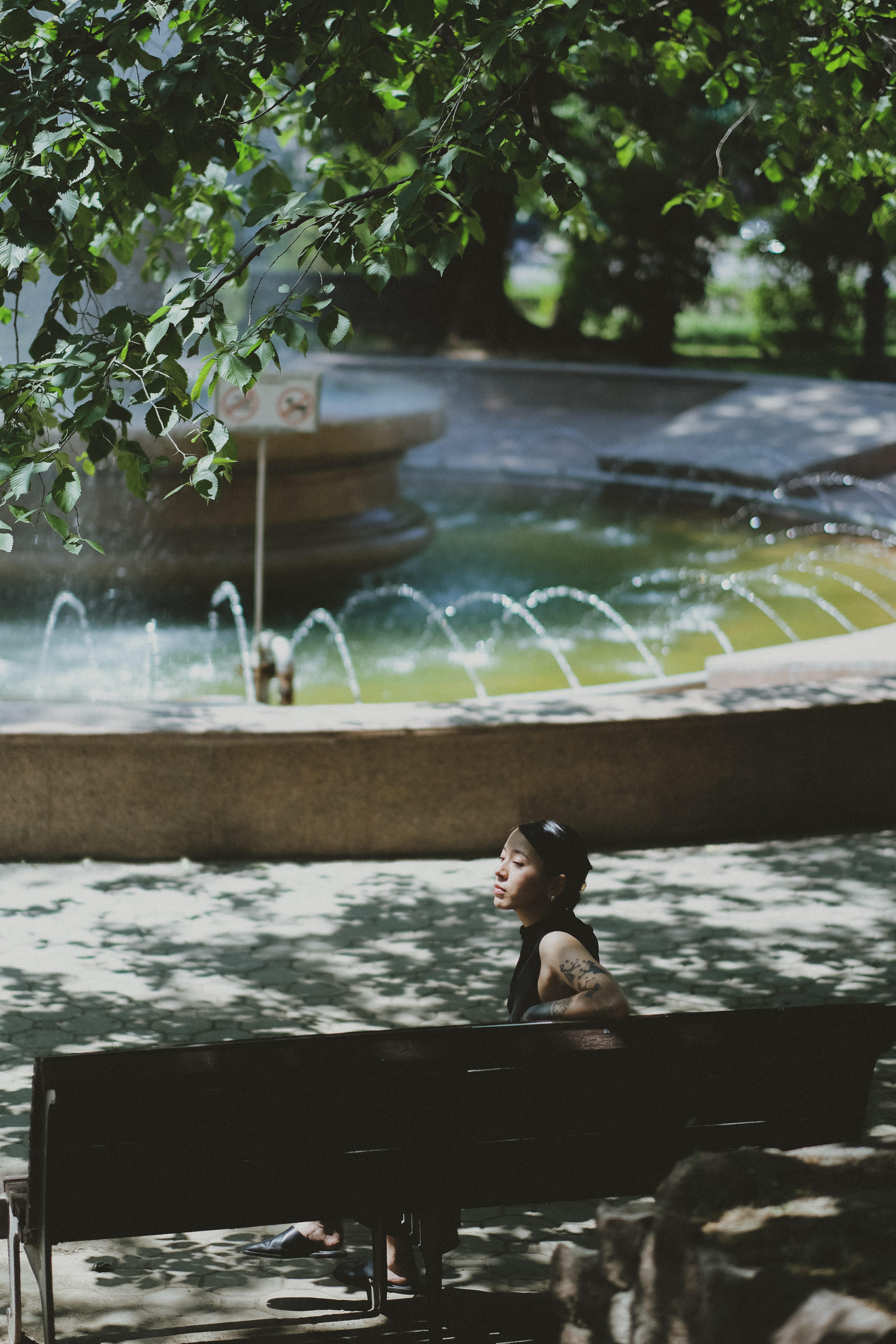
Nazira Karimi, photographed by Zhuldyz Valeyeva
As an artist whose work is gaining critical international traction, how do you foresee your practice evolving next? Are there new mediums, scales, or theoretical territories you are preparing to explore?
I must say I’m quite a dreamer, and I feel like I’m only just getting started, there is so much more to come. With some of my recent exhibitions, I’ve become increasingly interested in moving more deeply into physical, sculptural installation. That feels like an important direction for me right now, something I want to spend more time developing and expanding.
At the same time, I’ve been carrying a narrative film within me for quite a while. It’s something I feel a strong need to realise, and I am actively working towards making it happen. I think it will allow me to extend my language further into cinematic storytelling. For now, I prefer to let these trajectories unfold naturally. There are things already in motion, but also things still forming internally. So I would say: keep an eye out.
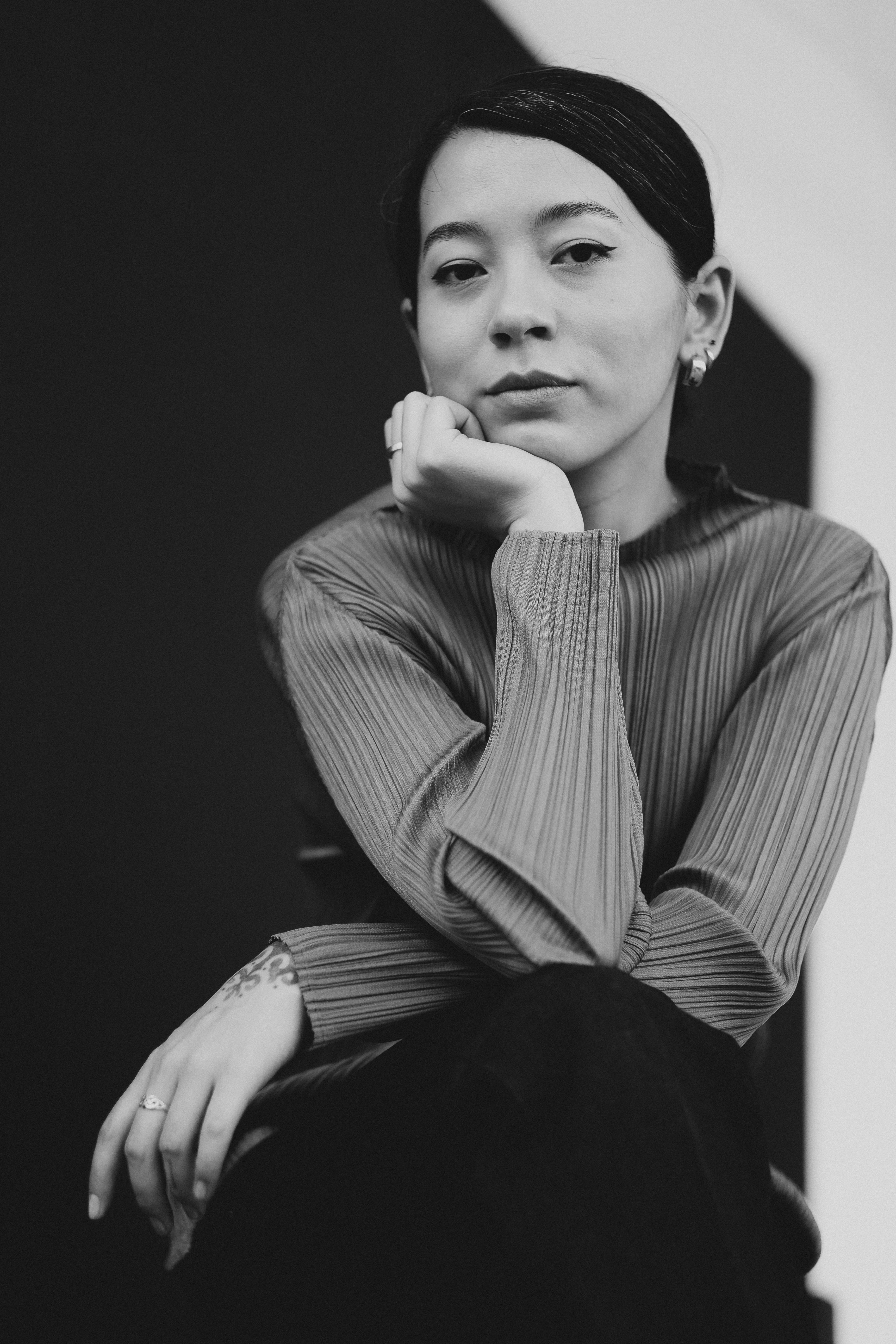
Nazira Karimi, photographed by Zhuldyz Valeyeva
Saving, but the title alone has me under its spell
That's the whole thing, isn't it? Not fiction as escape from what's true, fiction as the only vessel big enough to hold it 🤌🏻