

By Jodi Tang
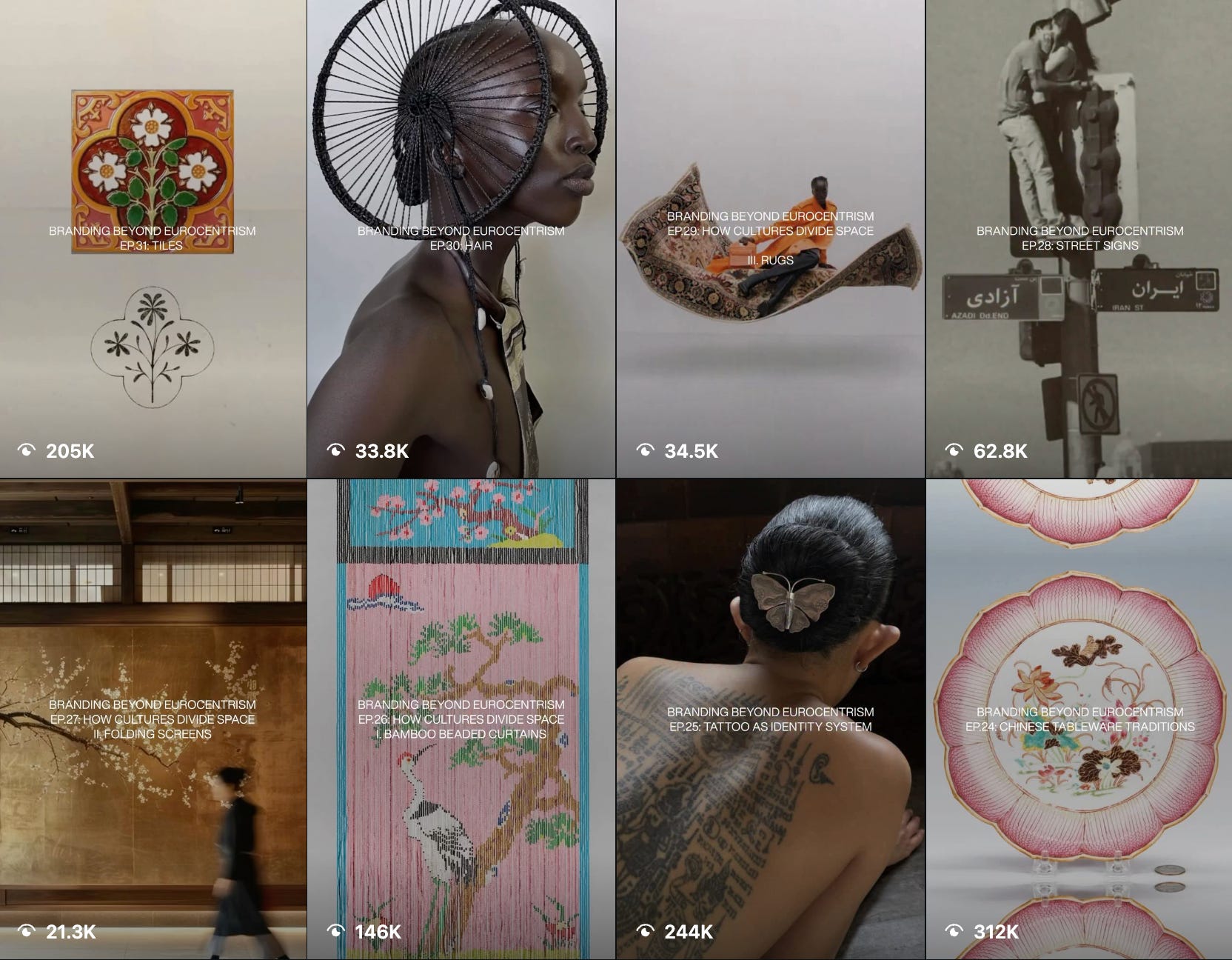
I get suspicious when everyone agrees that something is good.
Whenever a brand, a design language, or a beige minimalist aesthetic feels unanimously affirmed, my attention drifts away from the object. I stare at the agreement around it. Why does this feel so obvious to everyone? When did we all sign this contract?
I question the consensus.
Who’s speaking.
Where it’s published.
Which institutions are funding the launch party.
Without that context, it’s easy to mistake authority for neutrality. Or a marketing budget for Truth.
In August last year, I traveled to Inner Mongolia for work, and shortly after, I went to Egypt on holiday. They weren’t supposed to be connected. I certainly didn’t plan on having an existential crisis across two continents, but experiencing them back-to-back broke something in my brain.
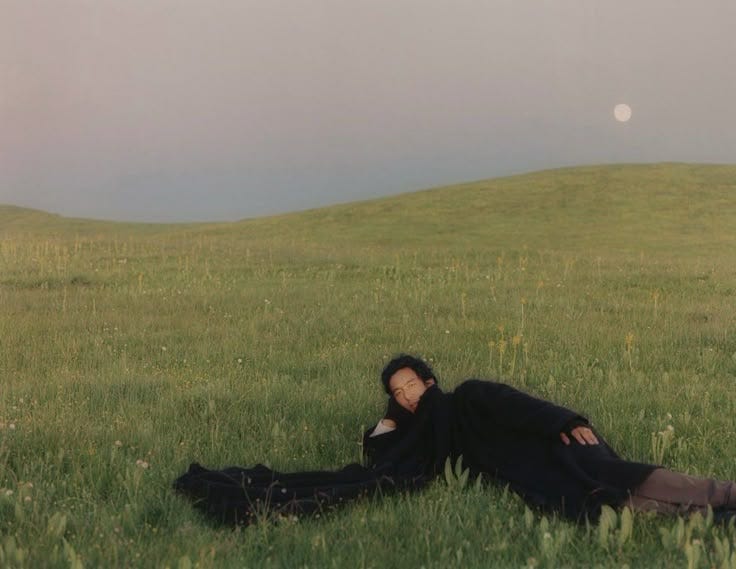
Inner Mongolia hit me with a specific kind of embarrassment. It is part of China, yet culturally it sits worlds away from the Han, urban, hyper-efficient environment I was born in. Being there made me realize that for all my “cultural awareness,” I was wearing blinders. I had been looking right past a profound, ancient logic simply because it didn’t fit the frame I was taught to see through.
Intelligence there ignores modern categories. Life organizes around land, movement, and survival. Tian and Di, sky and land, are structural realities regarding balance and responsibility. The horses, sheep, and cattle, they are collaborators. I watched systems operate simply because they worked, with zero need to explain themselves to a Western audience or justify their existence in a design manifesto.
Then came Egypt. If Mongolia made me feel ignorant, Egypt made me feel so incredibly small.
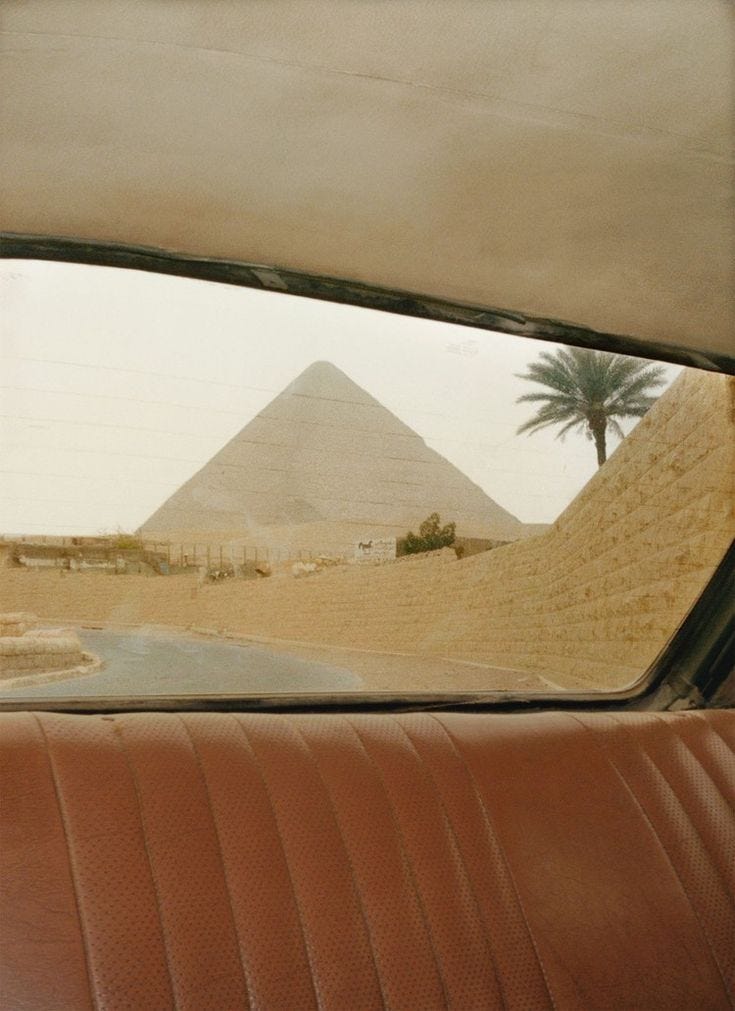
The pyramids are annoying like that. They make it very difficult to hold onto your cute little narratives about “progress.” You look at the mathematical precision and the engineering from thousands of years ago, and then you look at our current definition of innovation, and you start to wonder if we’re actually the primitive ones.
The absence bothered me the most. Despite Egyptian knowledge being foundational to mathematics, engineering, and cosmology, it barely registers as a living reference point today. On the flight back to Singapore, I stared out the window, exhausted, wondering what the world would look like if we hadn’t let that lineage fragment. If our sense of “modernity” hadn’t been hijacked by a handful of European cities in the 20th century.
I let the contradiction sit there. I stopped trying to force everything into a neat grid. (Terrible for my anxiety, great for my brain.)
Those two trips ruined my ability to be satisfied with the status quo. They dismantled the idea that culture evolves in a straight line, or that “good taste” is a universal standard.
They also forced me to look at my own background. Growing up across China, Singapore, and the US, and later being educated in a protected, elite art school environment, I realized how much of what I absorbed as “neutral” was actually just... inherited.
So, Design Beyond Eurocentrism started there. It was the only way I could give language to the discomfort I had been carrying for years.
Thank you for this. I thought I was the only one seeing and feeling similarly. Born in Italy and moved to France, I have always perceived several forms of indoctrination as uncomfortable and fundamentally wrong where everyone else seemed perfectly fit into it. I am both grateful and ungrateful at the same time..
I will dedicate and transfer this feeling of belonging beyond my own geographical roots in my brand.
💚💚