

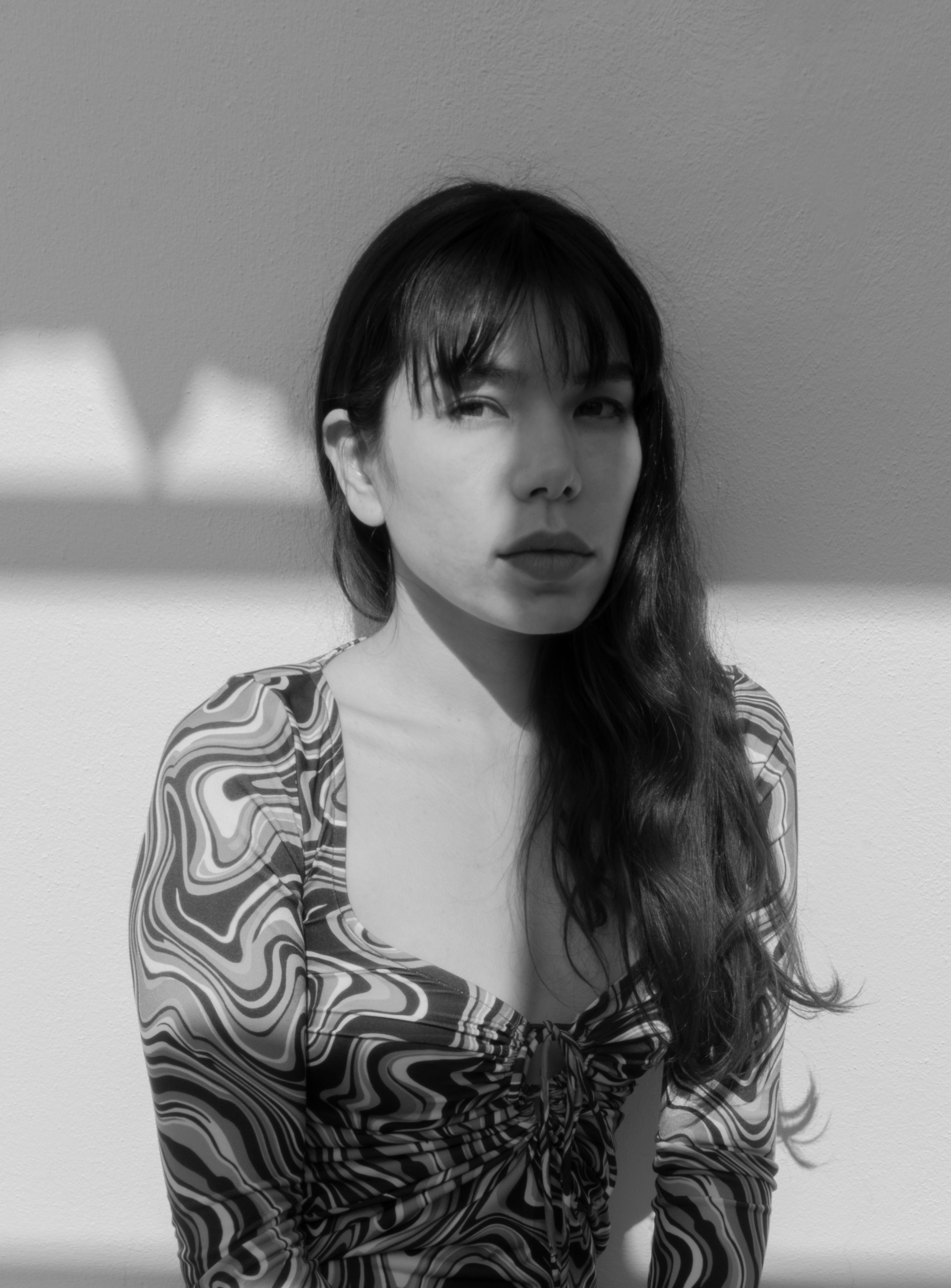
Artist Bio
Aya Elena Bundurakis (Greece/Japan) is an artist currently living between Crete & Corfu island, Greece. In her artistic practice, her camera acts as a sensory prosthesis of the body rather than a technological device: a tongue, sometimes with teeth. Her work moves between scientific and tacit knowledge, where agog looking becomes a survival technique in what she calls the techno-soil era. Her practice spans photography, text, video, drawing, and haiku, where her own body becomes both specimen and conduit, channeling collective flesh memory.
Her work has been exhibited internationally, including Fotomuseum Winterthur, Noorderlicht Festival, Fotomuseum Antwerp, K-Gold Temporary Gallery, Metronom Gallery, Marres, the Athens Photo Festival a.o., and has been nominated for awards such as the ING Unseen Talent Award, Bird in Flight prize and Prix Virginia.
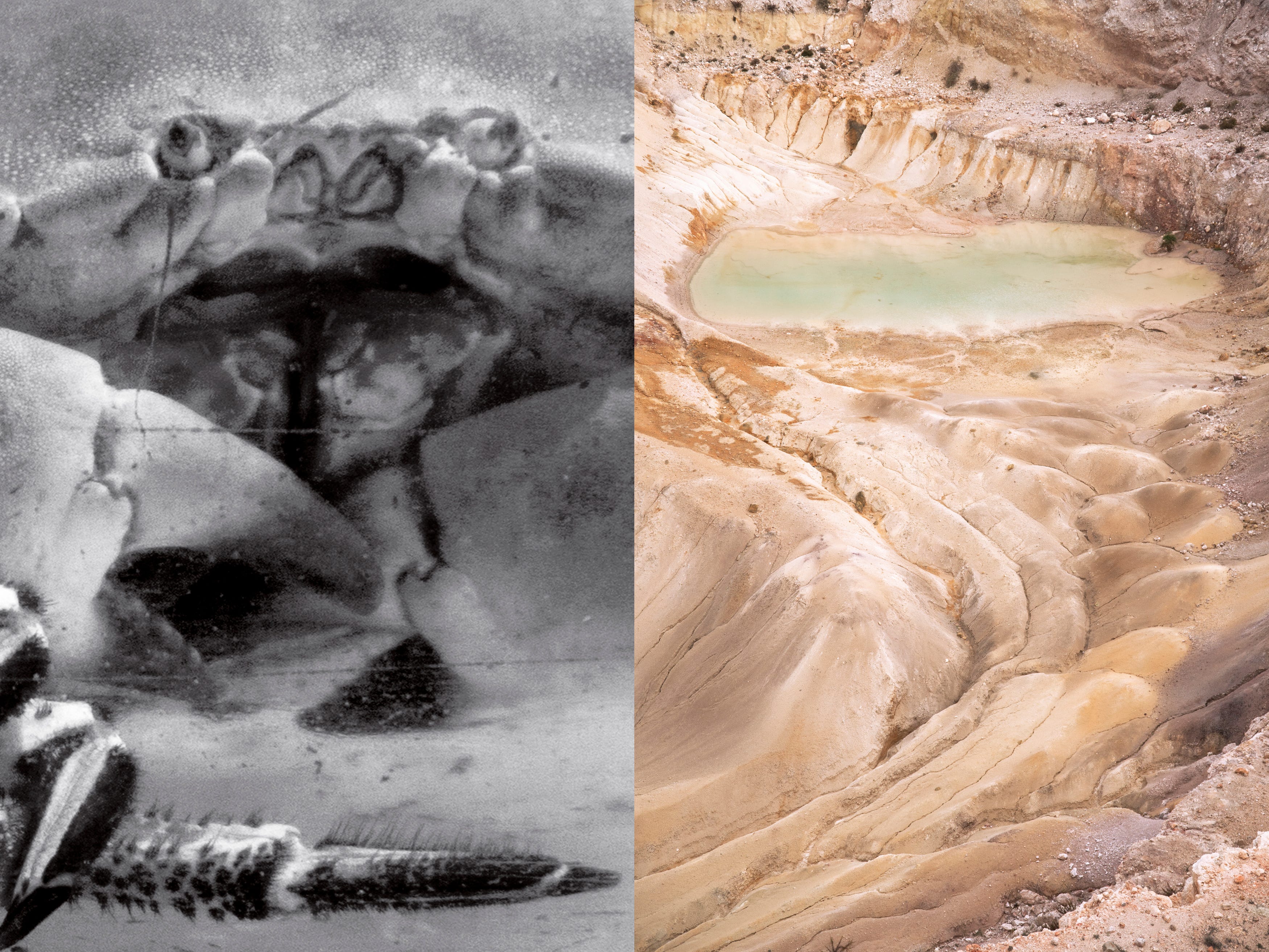
Aya Elena Bundurakis, Andric Lake, from the series Eating Magma. Courtesy of the artist.
On Conceptual Framework
Eating Magma approaches dualities through the condition of simultaneously eating and being eaten; as a porous condition in which bodies continuously leak into one another.
Bodies consume the world in order to survive, yet they are simultaneously absorbed, altered and metabolized within it. Within this cycle, nourishment becomes vulnerability and intimacy requires contamination. Eating Magma, inhabits the melting threshold between organism and environment, control and surrender.
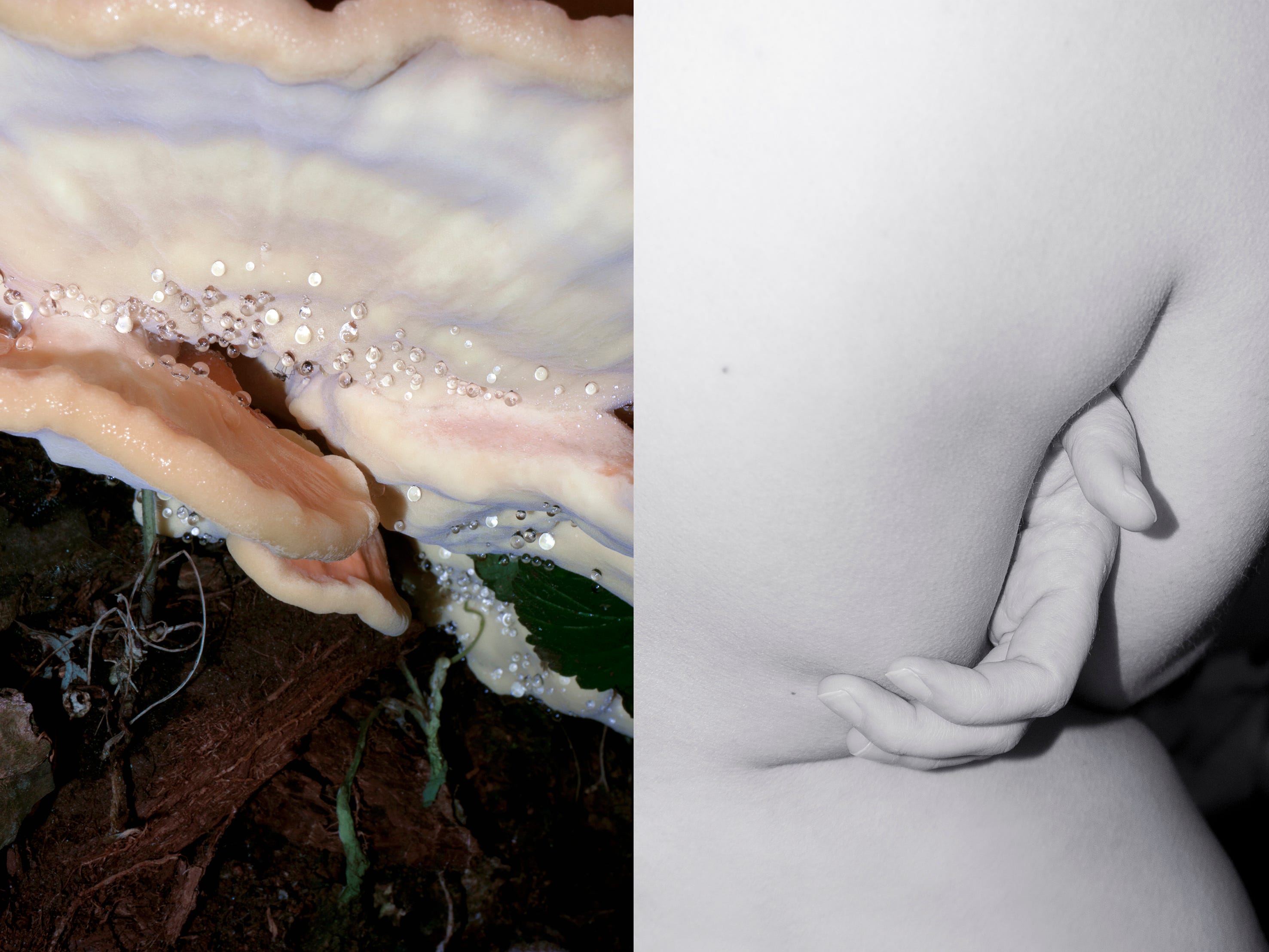
Aya Elena Bundurakis, Stratum Phalanges, from the series Eating Magma. Courtesy of the artist.
The work explores this porous continuum by focusing on four “F’s”: my Flesh, Food, Fauna and Flora -these four F’s constantly shifting and mutating into one another. Within this oozing universe we are moving from semi-alive limpets to mushy mycological lumps, and from body surfaces to vacuumed hearts. Are they food, animals, water ~or something else entirely?
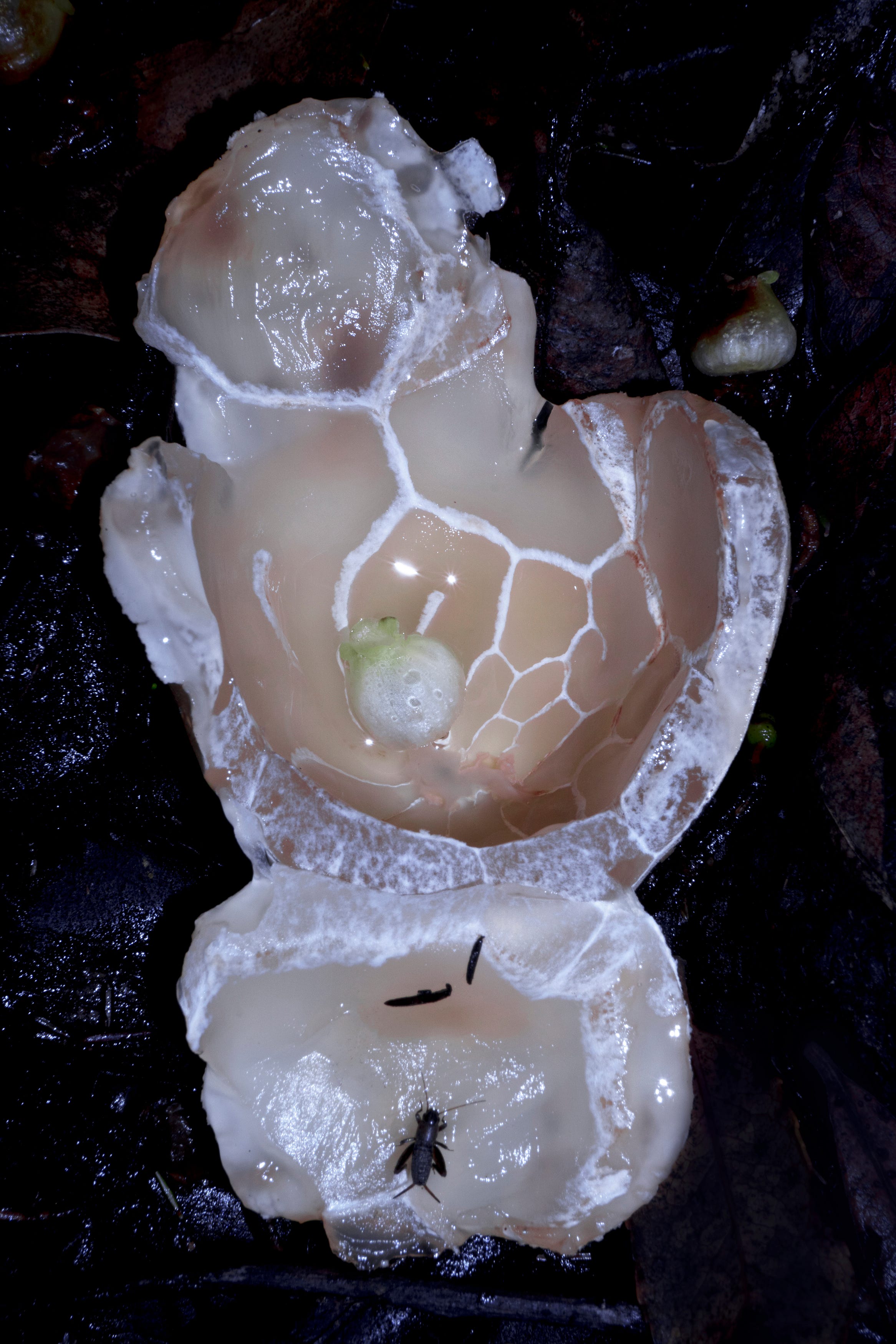
Aya Elena Bundurakis, Pulpus, from the series Eating Magma. Courtesy of the artist.
In Eating Magma, agog looking becomes a methodology of symbiosis. By isolating and reframing natural elements, it seeks to activate bodily awareness: to encounter fellow organisms not as distant ecological symbols of a landscape, but as a primal life material that shares structural, tactile, and evolutionary affinity with our own bodies. In a society engulfed in information systems designed for focus and intention to be easily lost, simple observation becomes a tool for a deep ecology awareness, but also, more egoistically, a tool for dealing with the stress of being alive.
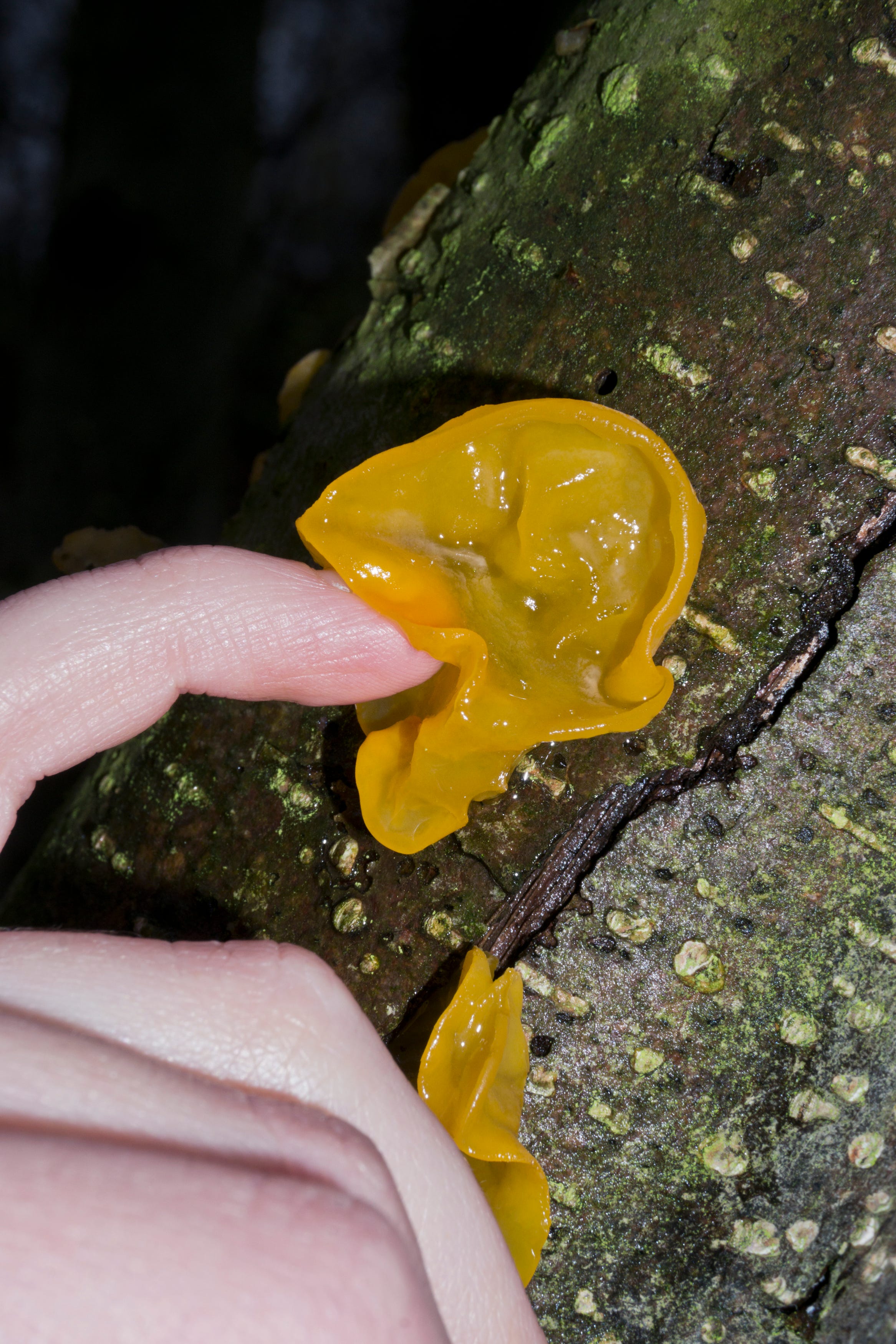
Aya Elena Bundurakis, Touching Glutinous II, from the series Eating Magma. Courtesy of the artist.
On Methodology & Rigor
My work often starts with bodily questions or organic sensations that I feel driven to further explore, before them being formally formulated. Such questions can look like: What is the primal form of nurture? Is body a free home that I have been gifted, one I continuously negotiate? How does it feel popping an egg out of your body? How does it feel to have a flesh?
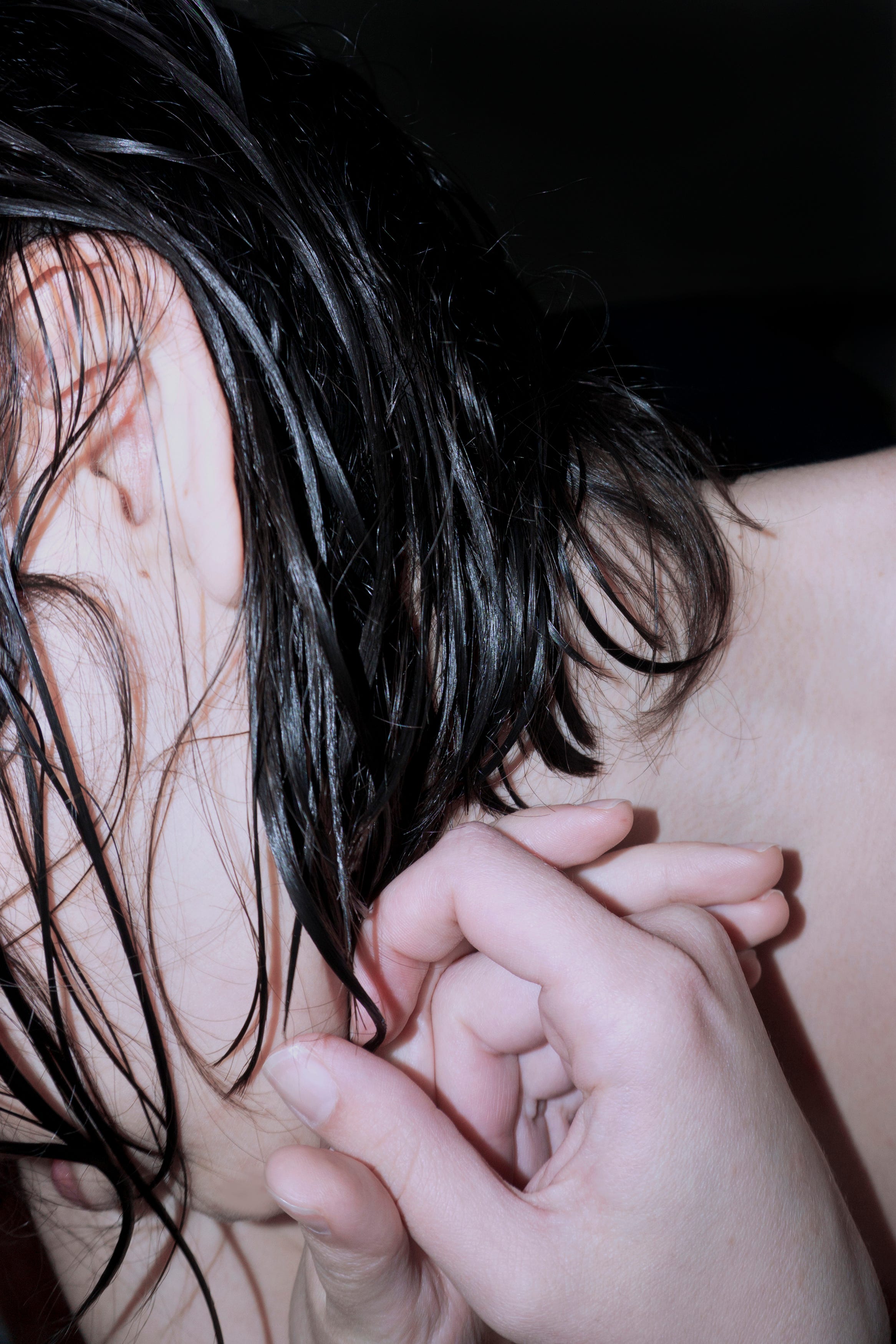
Aya Elena Bundurakis, Derma Den, from the series Eating Magma. Courtesy of the artist.
These organic sensations are stimulus and entry points into research, that land between scientific and academic material, food recipes and methods of nourishment, all-wordly medicine, spiritual and bodily practices, micro & super organisms. Writing is a mother throughοut this process. It allows these diverse and often chaotic materials to metabolise into something that gradually becomes legible.
Making images can enter any time, within this prolonged period of absorption. Sometimes it appears as hard to make sense of what images I want to make, to translate these thought processes. Yet I continue returning to it; I love images for their ability to operate as cross-modal anchors of activating multiple senses and generating an embodied recognition before language arrives.
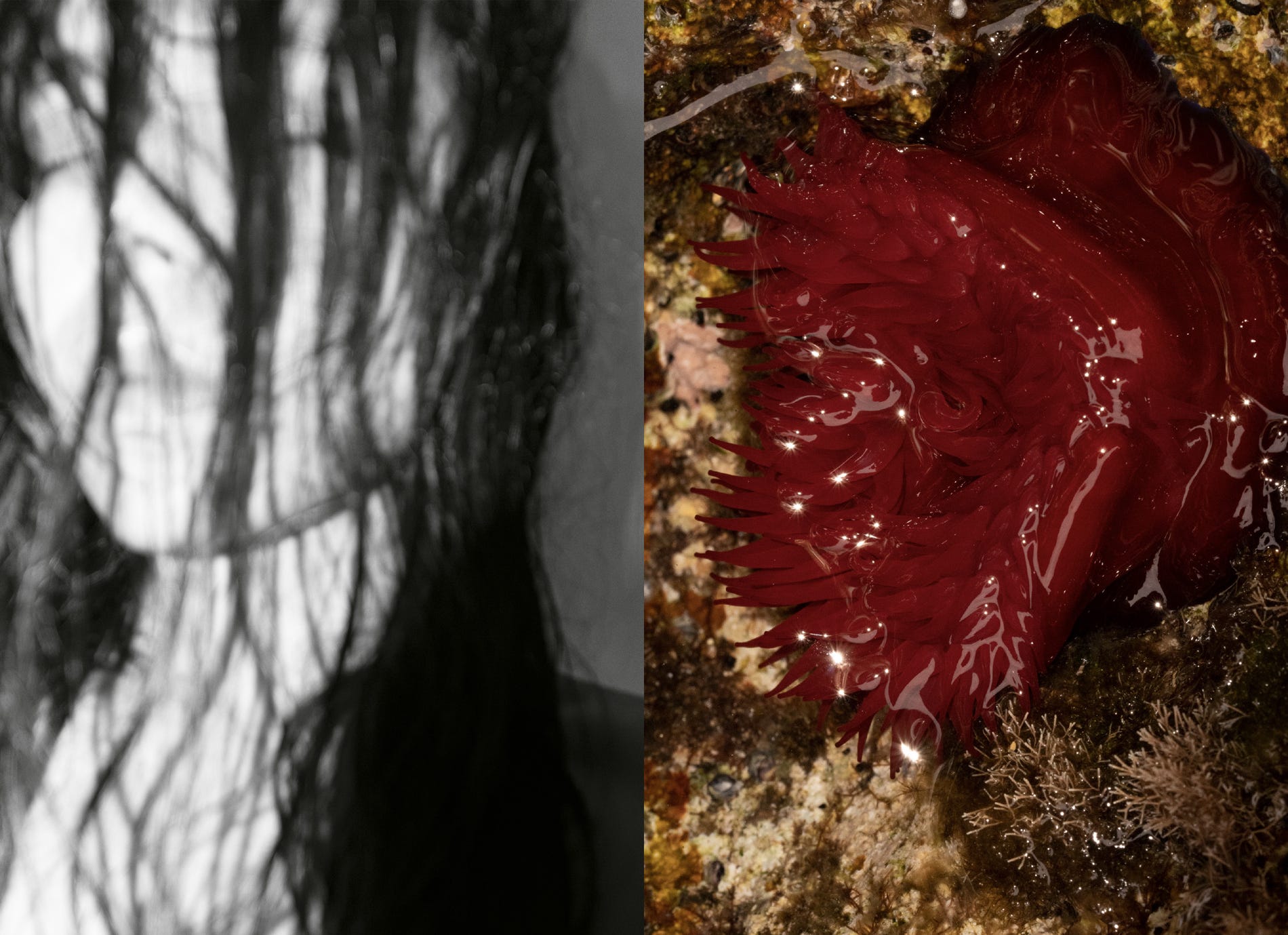
Aya Elena Bundurakis, Amniotic Auras. Courtesy of the artist.
I also love the unassuming simplicity and flatness of photography, especially as it is perceived in this timeline. In a way working with photography can be seen as a simplistic act to the core, where i borrow the optical technology that has been developed long before me and bring to it my own bodily tools, my eyes, my fingers, my breath, to together make an image, in a what lasts like a few or more moments. I am interested in what I call agog looking : a mode of sustained attention that questions categorisation in favour of relationship. It is a sensory methodology of symbiosis, but also a way of surviving the intensity and stress of being alive.
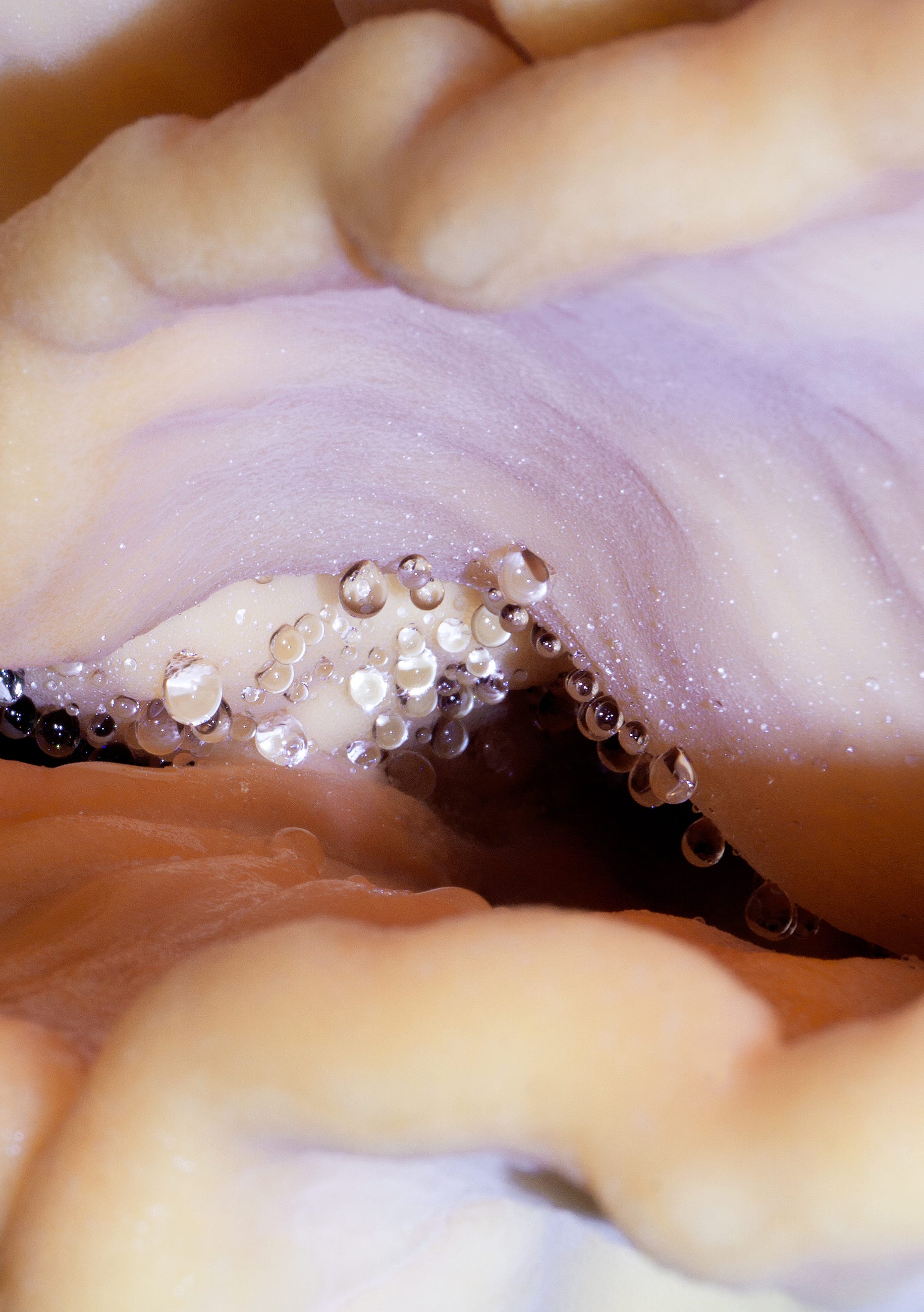
Aya Elena Bundurakis, Den with Drops. Courtesy of the artist.
The Trajectory
I am trying to immerse myself in the idea that (my) practice is not as a linear progression, but rather a constant swirl that has the possibility to expand, to go deeper, to go faster, slower. In that sense, the current goal of my practice would be to practise presence while in it, and experience joy when possible, and pain as a form of collateral joy too.
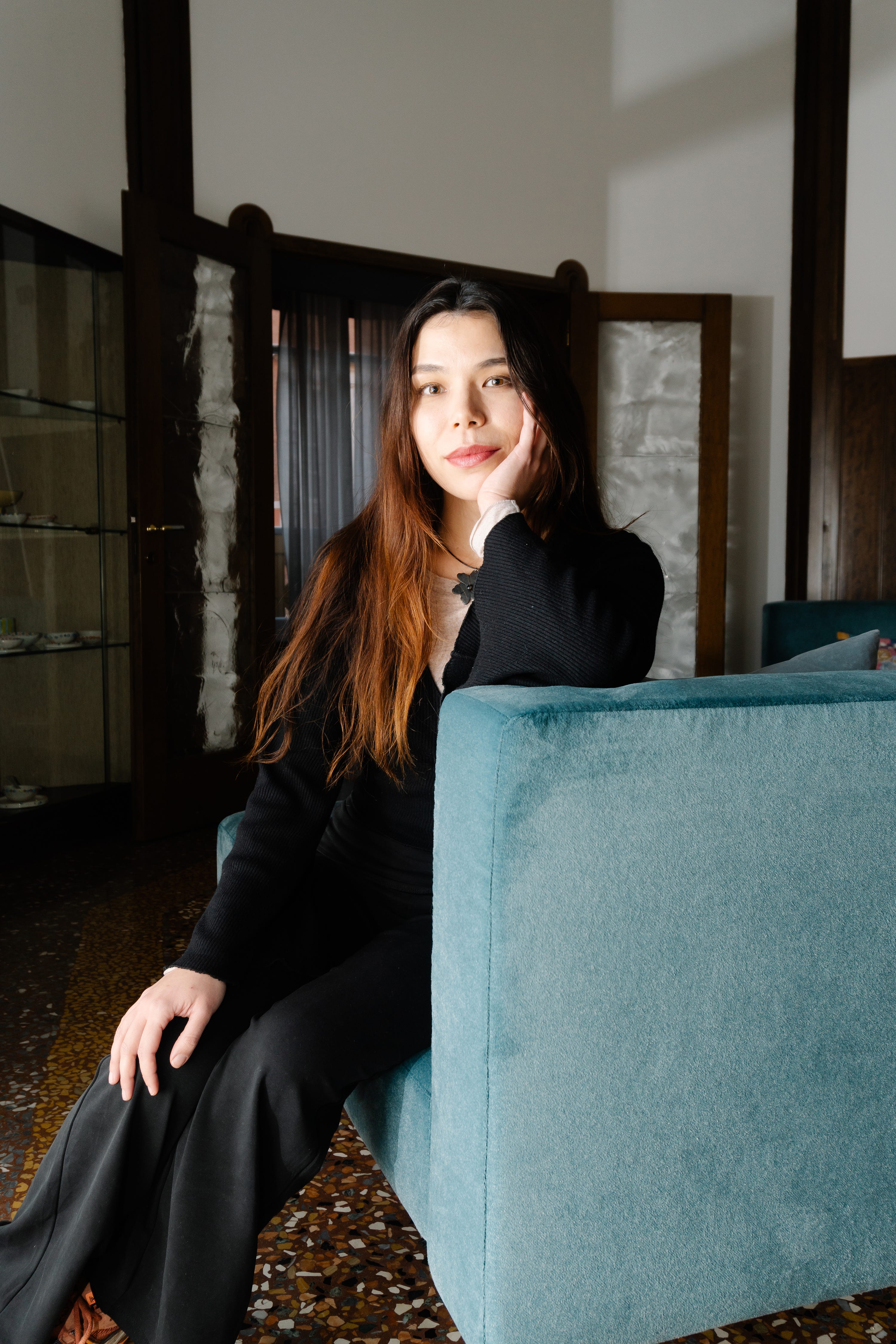
Aya Elena Bundurakis, photo by artist & photographer Sara Lorusso
Within my latest research Mud Logic, which follows the European Eel as mentor-species through fractured ecologies of control and desire, poetry functions as my main research methodology. It metabolises scientific data, field observations, ethnographic fragments and my own embodied experience of culturally fractured womanhood into research poetry. I hope to continue deepening and optimising this process, while keeping it raw.
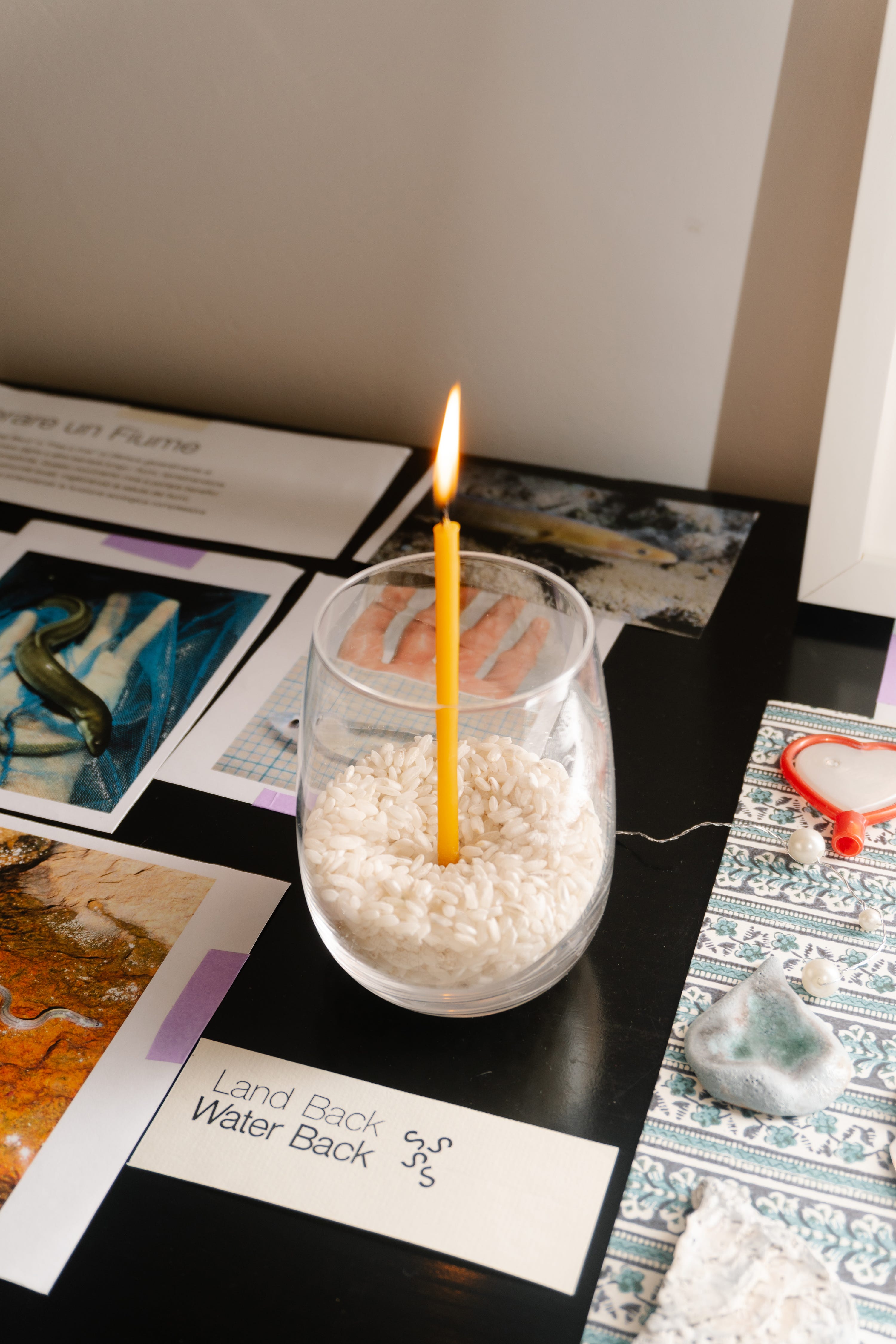
Aya Elena Bundurakis, Mud Logic, photo by artist & photographer Sara Lorusso